Will Office Chairs Damage Vinyl Flooring? Prevention Guide 2025
Will Office Chairs Damage Vinyl Flooring? Prevention Guide 2025
Will office chairs damage vinyl flooring? Yes, rolling chairs with hard plastic casters scratch, dent, and wear down vinyl surfaces through repeated friction and concentrated pressure points. The average home office chair rolls over the same 10-square-foot area thousands of times each year, creating visible track marks within months. This guide covers proven protection methods—from chair mats to replacement casters—plus repair options for existing damage.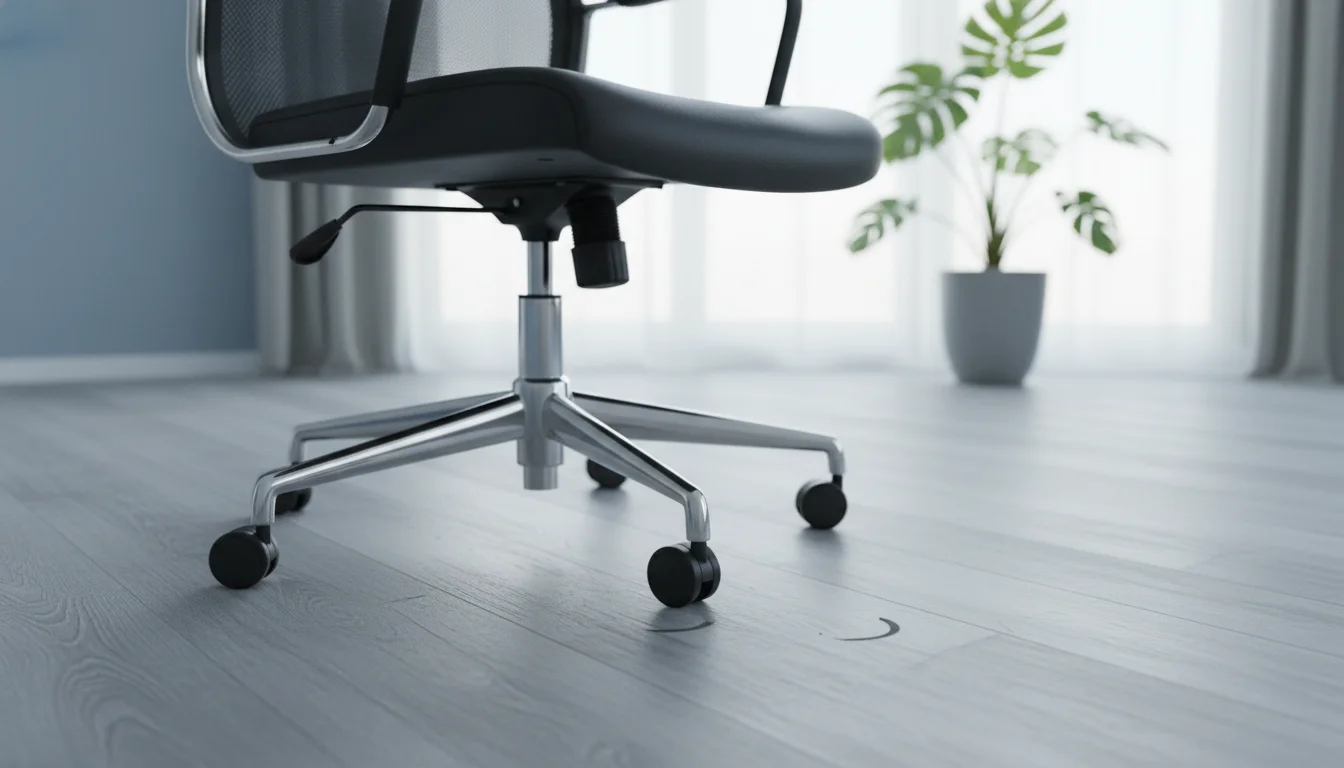
How Office Chairs Damage Vinyl Flooring
Hard plastic casters concentrate your body weight onto contact points smaller than a dime, creating pressure that exceeds vinyl's resistance threshold and causes permanent indentations.
Primary damage mechanisms:- Scratches and scuffs from debris trapped under wheels, acting like sandpaper with each roll
- Indentation marks where casters rest during work sessions, especially noticeable after six months or more
- Wear patterns forming visible tracks in high-traffic rolling zones
- Heat damage from friction softening the vinyl surface during rapid movements
- Compression zones where the chair sits stationary for extended periods
LVT flooring with thicker wear layers (20+ mil) resists damage better than standard LVP products with 12-mil layers. Budget vinyl under 6 mil offers almost no protection against rolling chair abuse.
I learned this the hard way. My home office vinyl looked pristine for three months, then developed a cloudy wear pattern that no amount of cleaning could remove.
Best Chair Mat Options for Vinyl Floors
Polycarbonate mats offer the best balance of protection and value for vinyl flooring, resisting cracks, discoloration, and curling that plague cheaper alternatives.
| Mat Type | Price Range | Lifespan | Pros | Cons |
|---|
| Glass | $100-300 | 10+ years | Smoothest rolling, never yellows, easiest to clean | Heavy, higher cost, can chip if dropped |
|---|---|---|---|---|
| Polycarbonate | $30-100 | 5-7 years | Durable, recyclable, crack-resistant | Minor yellowing possible after years |
| PVC | $15-40 | 1-3 years | Lowest cost, widely available | Sticks to vinyl, causes discoloration, cracks easily |
| Felt-backed | $40-80 | 3-5 years | Prevents slipping, quieter | Traps moisture, requires ventilation |
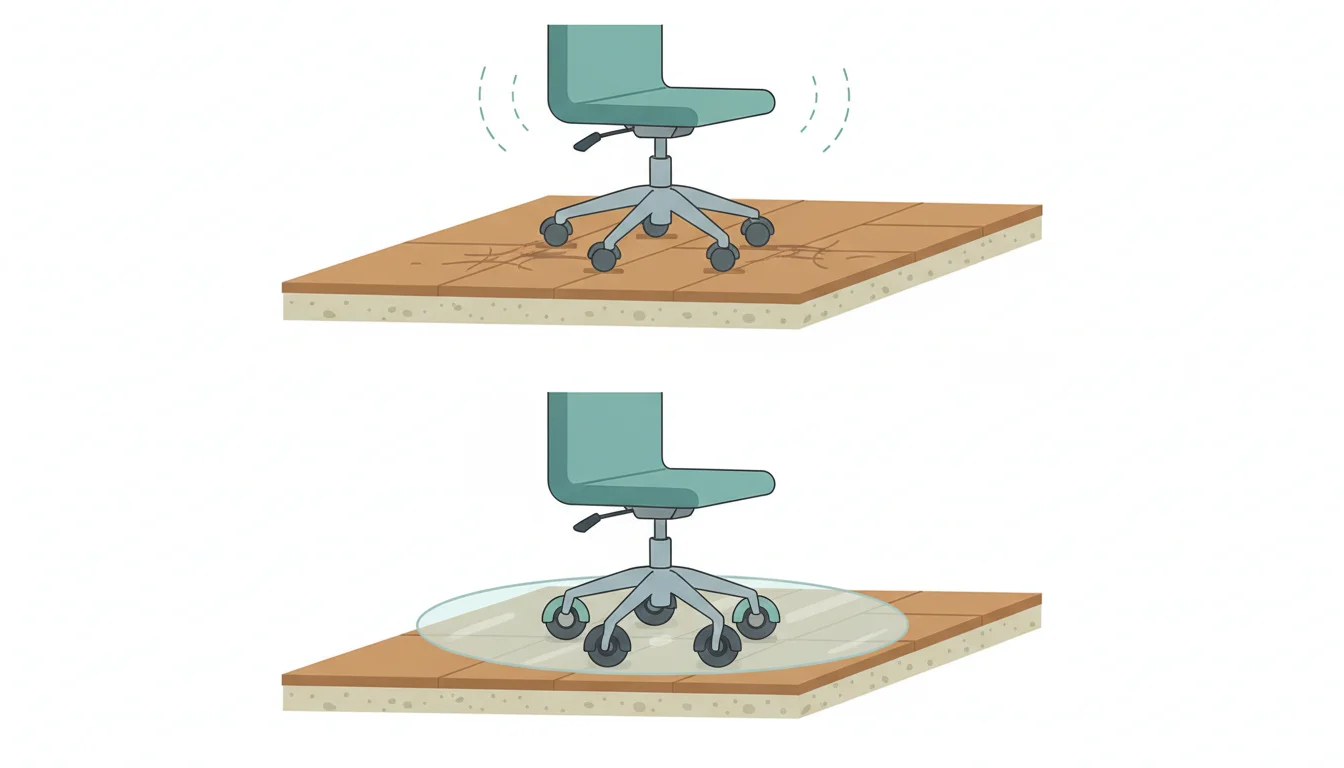
Size matters more than most buyers realize. A 36x48-inch mat covers the minimum rolling zone for standard desks. Choose a larger size if your desk exceeds 60 inches wide.
Avoid PVC mats on vinyl floors entirely. The chemical compounds react with vinyl surfaces, leaving permanent yellow stains that appear within weeks. This mistake costs more than buying quality upfront.
FlooringStores recommends polycarbonate specifically for LVP protection due to its resistance to dimpling and odor absorption.Choosing the Right Caster Wheels for Vinyl Protection
Soft polyurethane or thermoplastic rubber casters distribute weight across a larger surface area, reducing pressure per square inch by up to 60% compared to standard hard plastic wheels.
| Caster Type | Material | Floor Protection | Rolling Quality | Price (Set of 5) |
|---|
| Standard | Hard plastic/nylon | Poor, scratches and dents vinyl | Harsh, noisy | $10-20 |
|---|---|---|---|---|
| Soft | TPR or soft polyurethane | Good, non-marking | Smooth, quiet | $20-40 |
| Rollerblade-style | Polyurethane | Excellent, minimal friction | Very smooth | $30-40 |
Rollerblade-style casters are the best choice for vinyl protection. Their larger diameter wheels spread weight more effectively, while the polyurethane material grips without grinding.
DIY replacement takes under five minutes:- Pull old casters straight out with firm pressure
- Check stem size (11mm or 7/16-inch covers 90% of chairs)
- Push new casters in until they click
- Test roll on vinyl to confirm smooth operation
Additional Prevention Strategies and Best Practices
Daily sweeping removes the grit particles responsible for 80% of vinyl scratching. Trapped debris under wheels acts like sandpaper with every movement.
Essential maintenance habits:- Vacuum or sweep the chair zone daily, especially after outdoor shoes track in debris
- Place felt pads under all stationary furniture legs and desk feet
- Rotate your chair position weekly to distribute wear across a larger area
- Maintain indoor humidity between 35-55% to prevent vinyl expansion gaps
- Clean caster wheels monthly to remove embedded particles
Users over 200 pounds need upgraded protection. Standard mats and casters assume average body weight. Heavy-duty polycarbonate mats (1/4-inch thick) and commercial-grade casters handle higher loads without failing.
Skip rubber-backed mats and furniture pads. Rubber compounds react with vinyl flooring and leave permanent stains. Felt or fabric backing works safely.
Wholesale Flooring LA emphasizes that prevention costs pennies compared to repair or replacement expenses.Cost Analysis: Prevention vs Replacement
A $50 chair mat investment protects flooring that costs $500-1,500 to replace, making prevention 10-30 times more cost-effective than ignoring the problem.
| Protection Method | Cost | Lifespan | Annual Cost |
|---|
| Polycarbonate mat | $50-80 | 5-7 years | $10-15/year |
|---|---|---|---|
| Glass mat | $150-250 | 10+ years | $15-25/year |
| Soft casters | $25-40 | 3-5 years | $8-12/year |
| Both combined | $75-120 | Varies | $15-25/year |
- LVP flooring: $3-10 per square foot for materials
- Professional installation: $2-5 per square foot for labor
- Typical home office (100 sq ft): $500-1,500 total replacement
The math overwhelmingly favors prevention. Spending $75 on a mat and casters today saves $500 or more in flooring replacement within three to five years.
Most flooring warranties explicitly exclude rolling chair damage. Check your warranty terms before assuming coverage exists.
Repairing Existing Damage to Vinyl Flooring
Minor surface scratches respond well to DIY repair kits containing color-matched fillers and sealants, restoring appearance for under $30.
Repair options by damage severity:- Light scratches: Vinyl repair kits with wax filler sticks ($15-30)
- Deep scratches: Professional-grade polyurethane filler compounds ($30-50)
- Severe damage: Individual plank replacement in click-lock systems ($50-150, including spare planks)
- Widespread wear: Full section replacement when damage exceeds 30% of the room
Click-lock LVP systems allow individual plank replacement without disturbing surrounding flooring. Save spare planks from installation for perfect color matching.
The challenge with repairs lies in finding matching planks months or years after installation. Manufacturers discontinue patterns regularly, so buy extras during initial installation and store them flat.
When scratches appear white or cloudy, the wear layer is compromised. Surface repair helps aesthetically but won't restore original protection. Consider replacement for high-traffic zones showing this damage pattern.
FAQ
Do I need both a chair mat and soft casters?
Using both provides maximum protection, but either alone significantly reduces damage. Soft casters work well for lighter users under 180 pounds. Add a mat for heavier users or if you roll frequently throughout the day.
Will a rug work instead of a chair mat?
Rugs create more problems than they solve. Chair wheels catch on rug fibers, causing frustrating rolling resistance, and the rug bunches up under repeated movement. Debris trapped in rug fibers still scratches vinyl when compressed by wheels.
How long before office chair damage becomes visible?
Visible wear patterns typically appear within three to six months of daily use without protection. Hard plastic casters on thin vinyl (under 12-mil wear layer) show damage faster—sometimes within weeks of heavy use.
Are glass chair mats worth the higher cost?
Glass mats make sense for permanent home offices where you work 40 or more hours weekly. The smooth rolling surface reduces fatigue, and the 10-plus-year lifespan offsets the upfront cost. For occasional use, polycarbonate offers sufficient protection at a lower price.
What causes white marks on vinyl under office chairs?
White marks indicate wear layer damage from friction heat and pressure. The clear protective coating has worn through, exposing the printed design layer beneath. These marks cannot be removed with cleaning—prevention is the only solution.
Does vinyl thickness matter for chair damage resistance?
Wear layer thickness matters more than total vinyl thickness. Look for 20+ mil wear layers for home office areas. Budget vinyl with 6-12 mil wear layers offers minimal chair damage protection regardless of total product thickness.
Should I move my desk to carpet instead?
Carpet creates different problems: harder rolling, faster caster wear, and carpet fiber damage. Quality LVP with proper protection (a mat or soft casters) provides better long-term durability than carpet for home office use.
How do I know if my current casters are damaging vinyl?
Flip your chair over and examine the wheels. Black marks, embedded debris, or flat spots indicate damaging contact. Roll across white paper—if it leaves marks or picks up visible debris, the casters need replacement or cleaning.