Are Ergonomic Chairs Worth It? A Complete Cost-Benefit Analysis for 2025
Are Ergonomic Chairs Worth It? A Complete Cost-Benefit Analysis for 2025
Ergonomic chairs support natural posture through adjustable lumbar support, seat depth, and armrest positioning. Research shows these chairs reduce musculoskeletal disorders by up to 75% and back pain by approximately 50%. This analysis covers health benefits, productivity gains, and real cost calculations to help you determine whether the $300–$1,500+ investment makes sense for your situation.
What Makes a Chair Ergonomic? Key Features Explained
A chair earns the ergonomic label when it adapts to your body rather than forcing your body to adapt to it. Genuine ergonomic design follows ANSI/BIFMA certification standards that test for durability, safety, and actual ergonomic performance.
Essential features that separate ergonomic chairs from regular office chairs:- Adjustable seat height: Lets you plant your feet flat on the floor with thighs parallel to the ground
- Lumbar support: Contoured padding that maintains your spine's natural inward curve
- Seat depth adjustment: Ensures full thigh support without pressure behind your knees
- Armrest adjustability: Height and width controls keep your shoulders and neck in a neutral position
- Tilt mechanisms: Synchro-tilt allows the backrest and seat to move together as you shift positions
- Breathable materials: Mesh or perforated surfaces reduce heat buildup during long sessions
Marketing claims throw around "ergonomic" freely, so look for ANSI/BIFMA X5.1 certification as proof the chair has passed standardized testing. OSHA specifically recommends chairs meeting these standards for reducing workplace musculoskeletal disorders.
Health Benefits: What Research Shows About Ergonomic Seating
Proper lumbar support reduces lower back pain by approximately 50%, according to systematic reviews. The spine maintains its natural S-curve when supported correctly, reducing disc compression and nerve pressure that cause chronic pain.
Do ergonomic chairs help back pain? The evidence points to yes:| Health Concern | Impact of Ergonomic Seating |
|---|
| Lower back pain | 50% reduction with proper lumbar support |
|---|---|
| Musculoskeletal disorders | Up to 75% decrease in reported symptoms |
| Neck and shoulder strain | Significant reduction through adjustable armrests |
| Blood circulation | Improved flow from proper seat height and waterfall edges |
| Fatigue levels | Decreased through dynamic sitting features |
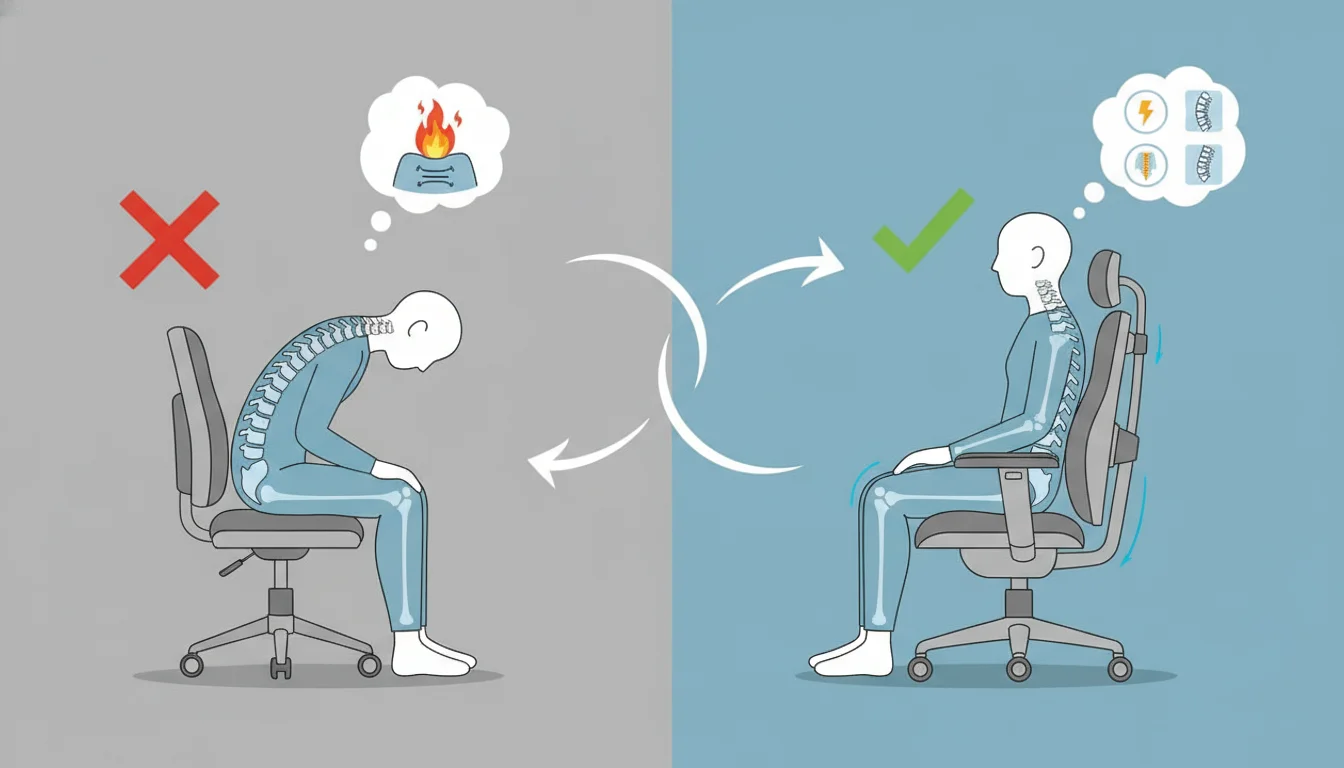
The mental health connection surprised me most during my research. Physical discomfort creates constant low-grade stress that your brain processes even when you're focused on work. Employees report better mood and concentration when pain distractions disappear. [Pacific Ergo] documents these psychological benefits alongside physical improvements.
Productivity and Performance: The Business Case
Workers using ergonomic seating show 15–20% higher productivity compared to those in standard chairs. This boost comes from sustained focus when your body stops sending distress signals every few minutes.
The numbers behind ergonomic chair ROI:- Productivity increase: 17.7% improvement when ergonomic chairs combine with posture training
- Sick day reduction: Over 1 million US workers annually miss time due to musculoskeletal issues, costing $54 billion
- Focus duration: Employees maintain concentration longer without repositioning breaks
- Remote worker gains: 15–20% productivity improvement for home office setups
Arturo Mota from Herman Miller Mexico states that ergonomic chairs "guarantee between 15% and 20% more productivity, reducing distractions and providing physical and mental benefits." Flexispot research confirms these gains apply equally to office and remote environments.
Fair warning: the productivity boost requires proper chair adjustment. An $1,800 Herman Miller set up incorrectly performs worse than a $200 chair positioned right.
Cost Analysis: Price Ranges and What You Get
Are ergonomic chairs worth it at every price point? The answer depends on your daily sitting hours and how long you need the chair to last.| Price Tier | Examples | Key Features | Best For | Typical Lifespan |
|---|
| Budget ($150–$300) | HON Ignition, Autonomous ErgoChair | Basic adjustability, standard foam | 4 hours daily or less | 2–3 years |
|---|---|---|---|---|
| Mid-range ($300–$700) | Secretlab Titan, Branch Ergonomic | Full adjustability, better materials | 6–8 hours daily | 5–7 years |
| Premium ($700–$1,500+) | Herman Miller Aeron, Steelcase Leap | Maximum adjustability, superior build | 8+ hours daily | 10–12 years |
The hidden cost calculation changed my perspective entirely. A $200 budget chair replaced every 3 years costs $600 over 9 years. A $900 premium chair with a 12-year warranty costs $900 total. Add potential medical expenses from inadequate support, and the math flips dramatically.
Tom's Guide testing confirms mid-range chairs hit the sweet spot for most users. You get 90% of premium features at 50% of the cost.ROI Calculation: When Does an Ergonomic Chair Pay for Itself?
A premium ergonomic chair costs approximately $0.05–$0.10 per hour of use over a 10-year lifespan. Compare this to average back pain treatment costs of $2,000–$5,000 annually, and the investment math becomes clear.
Breaking down ergonomic chair cost effectiveness:- Premium chair over 10 years: $1,200 ÷ 20,000 hours = $0.06/hour
- Budget chair replacement cycle: 3 chairs × $200 = $600 + potential medical costs
- Productivity value: 5% improvement on $60,000 salary = $3,000 annual value
- Healthcare savings: Avoiding one back treatment episode pays for the chair
The ROI timeline shortens based on your hourly value. A software developer earning $75/hour sees productivity gains cover the chair cost within months. A part-time remote worker takes longer to reach payback.
[Office Logix Shop] research shows most professionals recoup their ergonomic investment within 2–3 years through combined health and productivity benefits.
Ergonomic Chair Alternatives and Budget-Friendly Options
Full ergonomic chairs aren't the only path to better seating posture. Several alternatives deliver meaningful improvements at lower cost.
Affordable ways to improve your current setup:- Lumbar support pillows ($30–$60): Add targeted lower back support to any chair
- Seat cushions ($40–$80): Memory foam reduces pressure points and improves posture
- Footrests ($25–$50): Provide proper foot positioning when chair height doesn't adjust enough
- Certified refurbished premium chairs: Herman Miller and Steelcase at 50–70% off retail
- Sit-stand desk combinations: Reduce total sitting time rather than optimizing the sit
The refurbished market deserves special attention. A 5-year-old Herman Miller Aeron with remaining warranty often costs $400–$500. These chairs were built to last 12+ years, so you're buying proven durability at budget prices.
Trust me on this: a $40 lumbar pillow on your current chair beats doing nothing while you save for an upgrade.
FAQ
How many hours of daily sitting justifies an ergonomic chair investment?
Four hours of daily sitting marks the threshold where ergonomic benefits compound meaningfully. Below this, add-on supports work adequately. Above 6 hours, a proper ergonomic chair becomes essential for long-term spinal health.
Do gaming chairs provide the same benefits as ergonomic office chairs?
Gaming chairs prioritize aesthetics and racing-seat styling over ergonomic certification. Most lack proper lumbar adjustment depth and use inferior foam that compresses quickly. Office-focused ergonomic chairs consistently outperform gaming chairs in posture support testing.
How long should an ergonomic chair last before replacement?
Budget chairs last 2–3 years under daily use. Mid-range chairs maintain proper support for 5–7 years. Premium chairs with 10–12 year warranties often exceed their coverage period when maintained properly.
What's the single most important ergonomic feature to prioritize?
Adjustable lumbar support matters most for preventing back pain, with seat height adjustment coming second. If your budget forces a compromise, choose a chair with excellent lumbar support over one with more total adjustment options but weak back support.
Are standing desks a better investment than ergonomic chairs?
Standing desks and ergonomic chairs serve different purposes. Research shows alternating between sitting and standing produces better outcomes than either alone. Budget for an ergonomic chair first, then add a sit-stand desk when possible.
Do ergonomic chairs help with existing back problems or only prevention?
Both. Studies show proper lumbar support reduces existing lower back pain by up to 50%. Consult a physician for severe conditions, but ergonomic seating forms part of most back pain treatment protocols.
How do I know if my ergonomic chair is adjusted correctly?
Your feet should rest flat on the floor with knees at 90 degrees. Lumbar support should contact your lower back curve. Armrests should allow your shoulders to relax without hunching. The top of your screen should align with eye level when sitting upright.
Is buying a used premium ergonomic chair risky?
Certified refurbished chairs from authorized dealers carry warranties and quality guarantees. Private sales carry more risk. Check for mesh tears, mechanism smoothness, and remaining warranty before purchasing used premium chairs.