Why Is My Office Chair Sinking? Causes, Fixes & Prevention Guide (2025)
Why Is My Office Chair Sinking? Causes, Fixes & Prevention Guide (2025)
A sinking office chair occurs when the pneumatic gas lift cylinder loses internal pressure and can no longer support your weight at the set height. Gas cylinders contain compressed nitrogen and rubber seals that degrade over time, with most failures occurring after 3-5 years of regular use. This guide explains the mechanics behind why is my office chair sinking and provides step-by-step solutions to fix it yourself.
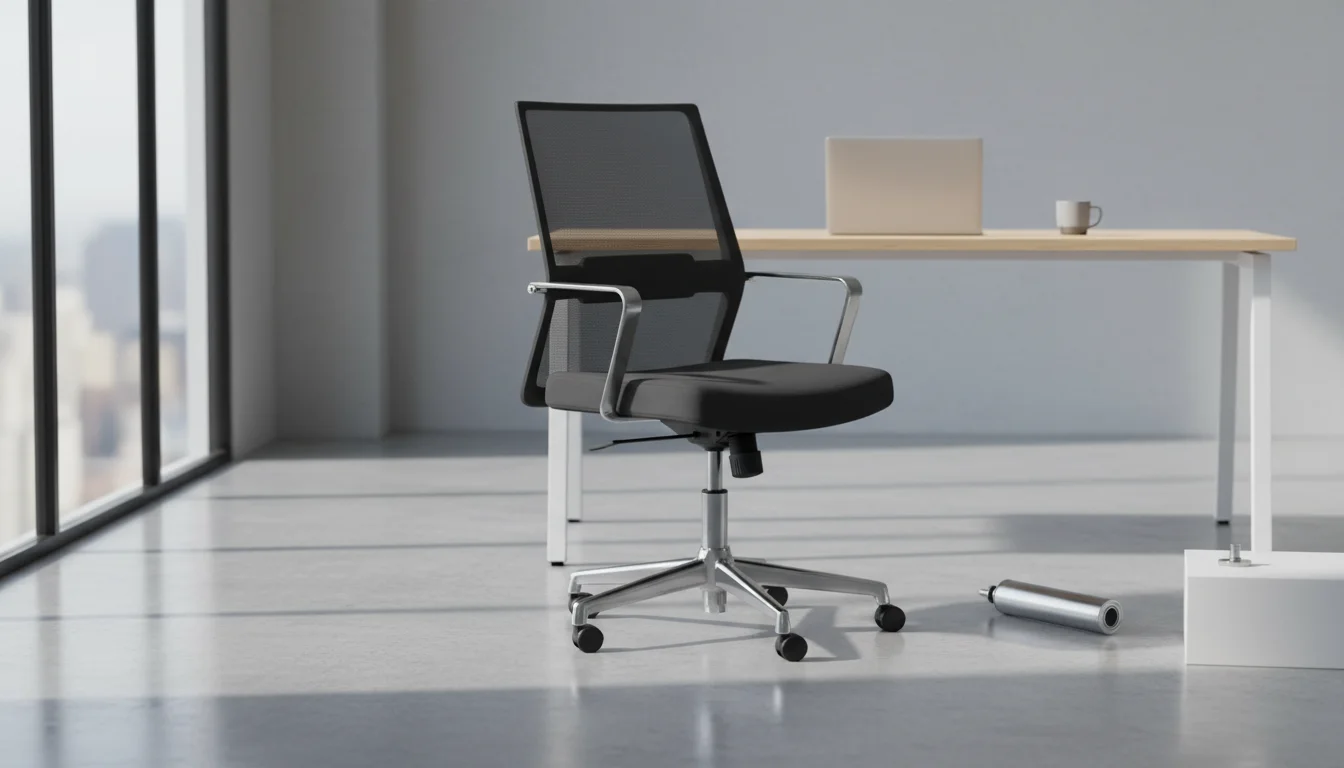
How Office Chair Height Adjustment Works
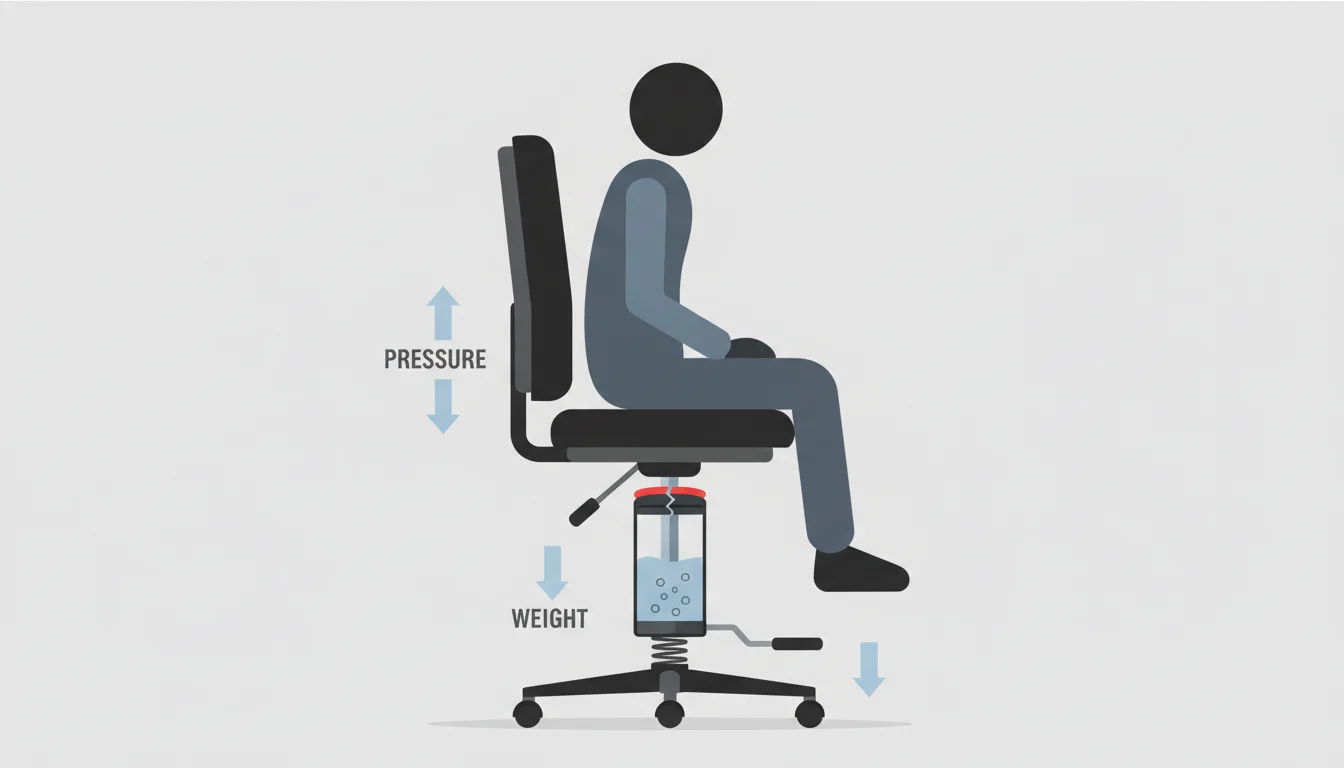
The pneumatic cylinder beneath your seat contains compressed nitrogen gas that creates resistance against your body weight, holding the chair at your chosen height.
When you pull the lever under your seat, it opens a valve inside the cylinder, allowing the piston to move freely. Sit down with the lever engaged, and your weight pushes the piston down, lowering the seat. Lift off slightly while holding the lever, and the gas expands to push the piston back up.
Release the lever and the valve closes, trapping the gas in two separate chambers divided by the piston. Any attempt to move the piston now compresses the gas, which resists strongly. That resistance is what locks your chair in place.
Rubber seals around the piston prevent gas from escaping between chambers. These seals are the weak point. Once they crack or wear down, pressure escapes and your chair starts sinking.
This gas spring technology is standard across nearly all modern office chairs. Budget task chairs and premium ergonomic models use the same basic mechanism—the difference lies in seal quality and cylinder construction, as explained by Office Chairs Unlimited.
Common Causes of a Sinking Office Chair
Seal failure inside the gas cylinder is the primary reason your chair keeps sinking. Once the rubber seals crack or degrade, compressed nitrogen escapes slowly and your chair loses the ability to hold height.
| Cause | What Happens | Timeline |
|---|
| Worn internal seals | Gas escapes through cracked rubber | 3-5 years of normal use |
|---|---|---|
| Scratched piston cylinder | Seal contact surface damaged, leaks occur | Immediate after damage |
| Manufacturing defects | Weak seals fail prematurely | Within first year |
| Exceeding weight capacity | Accelerated wear on all components | 1-2 years if chronic |
| Temperature fluctuations | Seals dry out, gas pressure varies | Gradual over time |
| Age and regular use | Natural degradation of all internals | 5-7 years typical |
Heat exposure accelerates seal deterioration. Keep your chair away from heating vents and direct sunlight. Workspace temperatures between 68-76°F help preserve seal integrity.
Dropping into your chair puts sudden stress on the cylinder. This abrupt force damages seals faster than gradual sitting. I learned this the hard way after destroying two cylinders in 18 months. Lowering yourself slowly extends cylinder life significantly, according to Branch Furniture.
Signs Your Gas Lift Cylinder Is Failing
Your chair sinking gradually throughout the workday is the earliest and most common warning sign of cylinder failure.
- Slow sinking while seated: You start at proper height but end up too low by afternoon
- Lever feels mushy or unresponsive: Internal seal deterioration causes changes in resistance
- Immediate drop when sitting: Sudden pressure loss indicates significant seal damage
- Hissing sound during adjustment: Gas actively escaping through compromised seals
- Chair won't hold any height: Complete pressure loss means the cylinder is finished
- Visible rust or corrosion: External damage often indicates internal problems
- Wobbly or unstable feeling: Weight distribution fails as the cylinder degrades
The hissing sound is your clearest diagnostic signal—that's compressed nitrogen escaping. Once you hear it, replacement is inevitable.
Continuing to use a failing cylinder affects your posture. You compensate for the sinking by hunching or straining, and chronic back and neck issues follow, as noted by Lofty Furniture. Fix it before your body pays the price.
Quick Temporary Fixes to Stop Your Chair From Sinking
A hose clamp wrapped around the exposed cylinder shaft creates a physical stop that prevents further sinking. This is the most reliable temporary solution.
| Method | Effectiveness | Difficulty | Cost | Duration |
|---|
| Hose clamp (jubilee clip) | High | Easy | $2-5 | Months |
|---|---|---|---|---|
| PVC pipe sleeve | High | Moderate | $5-10 | Months |
| Chair saver kit | High | Easy | $15-25 | 6+ months |
| Duct tape layers | Low | Easy | $5 | Days to weeks |
Fair warning: these fixes address the symptom, not the cause. Your cylinder is still leaking. They buy time while you source a replacement, but they're not permanent solutions. The tape method fails fastest and leaves residue. Start with the hose clamp if you need something tonight, according to Desky.
How to Replace Your Office Chair Gas Cylinder
Removing the old cylinder and installing a new one takes 20-30 minutes with basic tools and costs $20-50, compared to $150-500+ for a new chair.
Tools needed:- Pipe wrench or adjustable wrench
- Rubber mallet
- Penetrating oil (WD-40 or similar)
- New replacement cylinder (match your chair's specifications)
- Safety glasses
Flip your chair upside down. Grip the wheelbase and pull straight down to separate it from the cylinder. If it's stuck, tap around the center hub with your rubber mallet. Apply penetrating oil and wait 10 minutes if needed.
Step 2: Remove the cylinder from the mechanismThe cylinder press-fits into the chair mechanism under the seat. Use your pipe wrench to grip the cylinder body, then twist and pull downward. This requires force. Some cylinders release with a few taps from the mallet on the bottom.
Step 3: Install the new cylinderInsert the tapered top of the new cylinder into the chair mechanism. Press firmly or tap gently until seated. Reattach the wheelbase by pushing it onto the cylinder base. The tapered ends create friction fits that hold everything together.
Safety note: Never drill into, heat, or apply excessive force to a gas cylinder. They contain pressurized gas, and damaged cylinders pose an injury risk.Replacement cylinders are available on Amazon, from office furniture retailers, and directly from chair manufacturers. Match the cylinder length and diameter to your original. Class 4 cylinders offer better durability than Class 3 for about $10 more, according to Lofty Furniture.
When to Repair vs. Replace Your Office Chair
Replacing the gas cylinder makes financial sense when your chair is structurally sound and under 7 years old. A $30 cylinder can extend its life by another 5+ years.
| Factor | Repair | Replace |
|---|
| Chair age | Under 7 years | Over 10 years |
|---|---|---|
| Other components | All working | Multiple failures |
| Comfort level | Still comfortable | Foam compressed, support gone |
| Ergonomic features | Meets your needs | Outdated adjustability |
| Cost comparison | $20-50 cylinder | $150-500+ new chair |
Replace the entire chair when the seat foam is compressed flat, armrests are broken, the tilt mechanism fails, or the chair lacks lumbar support you now need.
The environmental angle matters too. Office chairs contain plastics, metals, and foams that take decades to decompose. Extending your chair's life by replacing one component keeps the rest out of landfills.
I've repaired chairs that should have been retired. When you're constantly adjusting, compensating, or feeling uncomfortable despite a working cylinder, the chair has aged out. But if your only complaint is sinking, spend the $30.
Preventing Future Gas Cylinder Problems
Staying within your chair's rated weight capacity is the single most effective way to extend cylinder life.
- Check weight ratings: Most standard chairs support 250 lbs; heavy-duty models handle 300-400 lbs
- Sit down gently: Dropping into the chair stresses seals with sudden force
- Keep cylinders clean: Wipe dust and debris from the exposed shaft monthly
- Choose Class 4 gas lifts: Higher quality seals and construction last longer
- Inspect regularly: Look for rust, corrosion, or unusual sounds during adjustment
- Control workspace temperature: Extreme heat or cold degrades seals faster
Class 4 cylinders cost marginally more but use thicker steel walls and better seals. If you're replacing a failed cylinder anyway, upgrade to Class 4 for the extra $10.
I now lower myself into chairs like I'm protecting an investment—because I am. That simple habit has kept my current cylinder working for four years without issues.
FAQ
How long do office chair gas cylinders last?
Most gas cylinders last 3-7 years with regular use. Higher quality Class 4 cylinders and gentle use extend lifespan toward the upper range, while heavy use or exceeding weight limits shortens it significantly.
Can I fix a sinking chair without replacing the cylinder?
Temporary fixes like hose clamps and PVC sleeves stop sinking mechanically but don't repair the leak. These methods work for weeks or months while you source a replacement. No lubricant or sealant can restore a failed cylinder.
Are office chair gas cylinders universal?
Cylinders come in standard sizes but vary in length, diameter, and lift range. Measure your existing cylinder's dimensions and check your chair manufacturer's specifications. Most standard office chairs use compatible sizing.
Is it dangerous to use a chair with a failing gas cylinder?
A sinking chair forces poor posture, leading to back and neck strain over time. Catastrophic cylinder failure is rare but documented. Replace cylinders showing significant wear, especially if you hear hissing sounds.
How much does professional gas cylinder replacement cost?
Office furniture repair services charge $50-100 for cylinder replacement, including parts and labor. DIY replacement costs $20-50 for the cylinder alone. The repair takes under 30 minutes with basic tools.
Why does my new office chair keep sinking?
New chairs that sink immediately likely have manufacturing defects or shipping damage. Contact the retailer or manufacturer for warranty replacement. Legitimate defects typically appear within the first few weeks of normal use.
Do standing desk converters solve the sinking chair problem?
Standing desks reduce time spent in your chair, decreasing cylinder wear, but they don't fix an already failing cylinder. Consider them for ergonomic variety rather than a solution to mechanical failure.