Why Are Office Chairs Mesh? Benefits, Drawbacks, and What You Need to Know
Why Are Office Chairs Mesh? Benefits, Drawbacks, and What You Need to Know
Mesh office chairs use woven fabric with thousands of tiny holes that allow continuous airflow, reducing body temperature by 3.6 to 9°F compared to leather or foam alternatives. This breathability prevents heat and moisture buildup during extended sitting sessions. This guide covers the science behind mesh, how it compares to other materials, and whether it fits your needs.
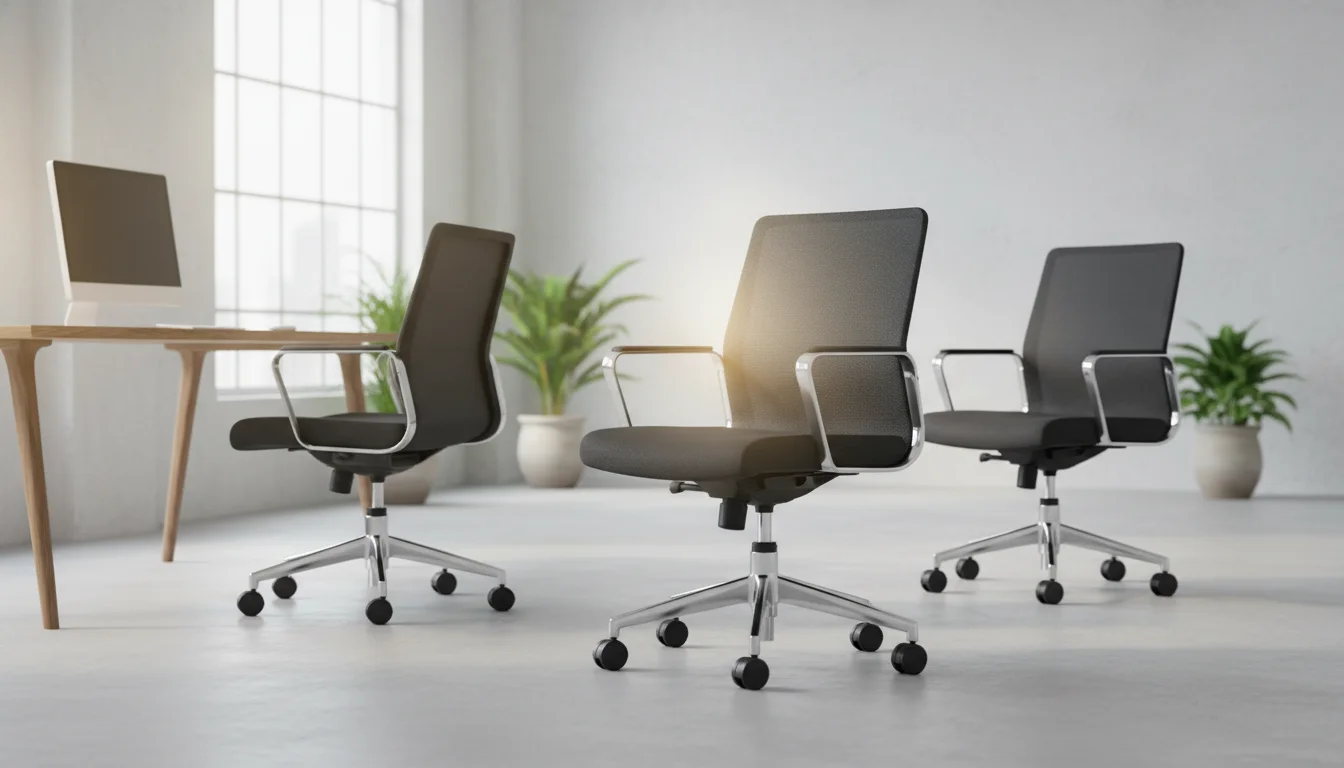
The Science of Breathability: How Mesh Keeps You Cool
The open-weave structure creates a convective cooling effect as warm air rises and escapes through the fabric instead of pooling against your skin.
Traditional upholstered chairs act as insulators. Leather seats can become up to 15°F hotter than room temperature within 30 minutes, while mesh stays close to ambient temperature throughout your workday.
Key breathability advantages:- Air circulates freely through the backrest and seat surface
- Moisture wicks away and dries three times faster than foam cushions
- Body heat dissipates naturally rather than accumulating
- Skin stays dry even during 8-hour sessions
A 2021 study in Applied Ergonomics found that mesh chairs significantly improved thermal comfort over traditional cushioned seats under warm conditions. The difference becomes especially pronounced during summer months or in poorly ventilated offices.
I noticed the cooling effect most during afternoon hours when room temperatures peak. My lower back used to feel damp by 3 PM in my old leather chair—that stopped completely after switching to mesh. Gzhookay Research-chairs-keep-you-cool.html) confirms that mesh reduces back temperature by 2 to 4°C in humid conditions.
Ergonomic Benefits of Mesh Office Chairs
Why are office chairs mesh from an ergonomic perspective? The flexible material conforms to your body's unique contours while maintaining consistent tension throughout your sitting session.This adaptability creates several measurable advantages for spinal health and comfort:
- Lumbar support: Quality mesh maintains your spine's natural S-curve through tension-based design rather than static foam padding
- Weight distribution: Pressure spreads evenly across the seating surface, eliminating hot spots on hips and thighs
- Posture maintenance: The material provides subtle resistance that discourages slouching
- Dynamic movement: Slight give in the mesh accommodates position shifts without losing support
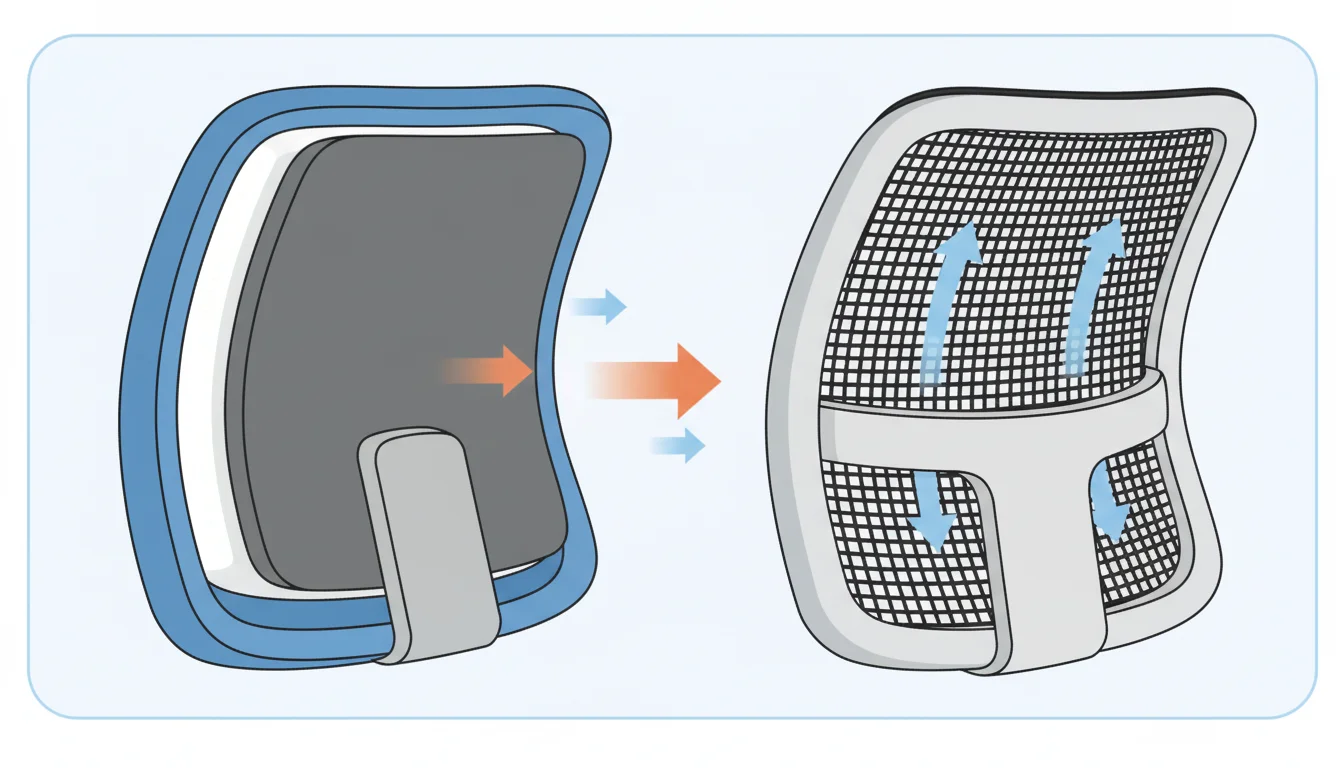
A study cited in the Journal of Ergonomics found that well-designed mesh chairs reduce musculoskeletal discomfort for office workers. Jason L notes that mesh backrests encourage proper posture by providing flexible lumbar support that adapts to user movement.
Fair warning: the ergonomic benefits depend heavily on chair quality. Budget mesh chairs often lack proper lumbar adjustment, so spending more upfront pays dividends in back health over years of daily use.
Mesh vs. Leather vs. Fabric: Which Material Wins?
Each material excels in different conditions. Your climate, aesthetic preferences, and comfort priorities determine the best choice.
| Factor | Mesh | Leather | Fabric |
|---|
| Breathability | Excellent airflow | Traps heat, sticky in warmth | Moderate, absorbs moisture |
|---|---|---|---|
| Durability | 7-10 years | 10-15 years with conditioning | 5-7 years |
| Maintenance | Wipe clean, vacuums easily | Requires conditioning | Absorbs stains and odors |
| Initial Comfort | Firm, adjustment period needed | Soft immediately | Cushioned feel |
| Climate Suitability | Warm and humid environments | Cool, climate-controlled spaces | Moderate temperatures |
| Price Range | $150-$1,500+ | $200-$2,000+ | $100-$800 |
| Aesthetic | Modern, minimalist | Executive, traditional | Varied options |
Leather looks premium in corner offices but becomes uncomfortable during summer without aggressive air conditioning. Fabric chairs feel immediately welcoming but turn into odor traps over time. Mesh requires a 2-week adjustment period before the firmness feels natural.
I spent three years in a leather executive chair before switching. The mesh felt hard at first, but after two weeks, my afternoon fatigue disappeared. The temperature difference alone made the transition worthwhile. Ace Office Systems confirms that mesh provides better long-term value through durability and reduced maintenance costs.
Durability and Maintenance: What to Expect
Quality mesh chairs last 7 to 10 years with minimal care, outlasting most fabric alternatives and matching leather's lifespan without the conditioning requirements.
Maintenance requirements by material:| Task | Mesh | Leather | Fabric |
|---|
| Weekly cleaning | Vacuum dust | Wipe with damp cloth | Vacuum thoroughly |
|---|---|---|---|
| Spill response | Wipe immediately | Blot, apply conditioner | Blot, may stain |
| Monthly care | Spot check tension | Condition with leather cream | Deep vacuum |
| Annual maintenance | Check frame, lubricate | Professional conditioning | Steam clean |
The mesh itself requires almost no attention. Spills wipe away before they absorb, and dust vacuums off in seconds. The frame and mechanism need occasional lubrication, but the fabric portion handles daily abuse without complaint.
Common failure points include sagging after 5+ years of heavy use and tears from sharp objects or rough handling. Avoid rolling over power cords or leaving scissors on the seat—these simple precautions extend lifespan significantly.
Common Mesh Chair Problems and Solutions
Some users struggle with mesh despite its benefits. The most frequent complaints have straightforward fixes.
Problem: Mesh feels too firmThe tension that provides support also creates initial discomfort for users accustomed to cushioned seats. Add a thin seat cushion during the adjustment period, then remove it after 2-3 weeks when your body adapts.
Problem: Sagging meshThis indicates either low-quality materials or end of lifespan. Budget chairs sag within 2 years, while quality chairs maintain tension for 7+ years. If sagging occurs early, the chair was likely undersized for your weight.
Problem: Discomfort for heavier usersStandard mesh supports up to 250 pounds. Users above this weight need chairs with reinforced mesh and higher weight capacity ratings. Look for 300+ pound ratings and steel-reinforced frames.
Problem: Mesh patterns imprinting on clothingTight-weave mesh reduces this issue. Loose-weave budget chairs leave visible patterns on light fabrics—this matters more for appearance than comfort.
Let's be honest: mesh works for most people, but not everyone. If you prefer sinking into cushions, mesh will frustrate you regardless of quality level.
Are Mesh Office Chairs Worth It? Cost-Benefit Analysis
The investment makes sense for anyone sitting 6+ hours daily in warm conditions or struggling with back discomfort.
| Price Tier | Features | Best For | Expected Lifespan |
|---|
| Budget ($100-$300) | Basic mesh, limited adjustability | Occasional use, guest seating | 2-4 years |
|---|---|---|---|
| Mid-Range ($300-$600) | Quality mesh, lumbar adjustment, armrest options | Daily home office use | 5-7 years |
| Premium ($600-$1,200) | Advanced mesh technology, full adjustability, warranties | Professional daily use | 7-10 years |
| High-End ($1,200+) | Proprietary mesh, extensive warranties, replaceable parts | Executive use, maximum longevity | 10-15 years |
Budget chairs save money upfront but cost more per year of use. A $150 chair lasting 3 years costs $50 annually, while a $600 chair lasting 10 years costs $60 annually but provides superior comfort throughout.
The health math favors quality mesh even more strongly. Back pain treatment costs thousands, and physical therapy runs $150+ per session. A chair that prevents these issues pays for itself quickly. Hinomi USA emphasizes that ergonomic mesh chairs reduce musculoskeletal issues when used consistently.
FAQ
Do mesh office chairs cause back pain?
Quality mesh chairs with proper lumbar support reduce back pain by maintaining spinal alignment. Poor-quality chairs without adjustable support can worsen existing issues. Always test lumbar adjustment before purchasing.
How long does it take to adjust to a mesh chair?
Most users adapt within 2 weeks of consistent use. The initial firmness feels uncomfortable when coming from cushioned seats, but this adjustment period is normal and temporary.
Are mesh chairs good for heavy people?
Standard mesh supports 250 pounds. Heavier users need chairs rated for 300+ pounds with reinforced mesh and steel frames. These models cost more but prevent premature sagging and support failures.
Do mesh chairs get hot in summer?
The opposite occurs. Mesh stays 3.6 to 9°F cooler than leather or foam because air circulates continuously. Summer heat is when mesh chairs provide their greatest comfort advantage.
Can mesh chairs be repaired if torn?
Minor tears at seams can sometimes be repaired. Significant mesh damage requires replacement panels or entire chair replacement. Quality chairs offer replacement parts through manufacturers.
Why do mesh chairs cost more than fabric chairs?
Engineering tension-based support requires precise manufacturing, and the mesh material itself costs more than basic fabric. Ergonomic adjustments add complexity, and these factors combine to increase pricing.
Should I buy a mesh chair for a cold office?
Mesh works in any temperature, but breathability becomes less important in cold environments. Leather or fabric provide warmth that mesh lacks, so consider your heating situation before deciding.
How do I clean a mesh office chair properly?
Vacuum dust weekly with a brush attachment and wipe spills immediately with a damp cloth. For deeper cleaning, use mild soap and water on the mesh while avoiding saturation. Let dry completely before use.