Why Your Office Chair Keeps Sinking: Causes, Fixes, and Prevention (2025)
Why Your Office Chair Keeps Sinking: Causes, Fixes, and Prevention (2025)
A sinking office chair occurs when the pneumatic gas cylinder fails to hold compressed nitrogen, causing the seat to gradually lower during use. Gas cylinder seals typically wear out after 3-5 years of regular use, making this one of the most common office furniture complaints. This guide covers the root causes, temporary fixes, permanent repair solutions, and prevention strategies to keep your chair at the proper height.
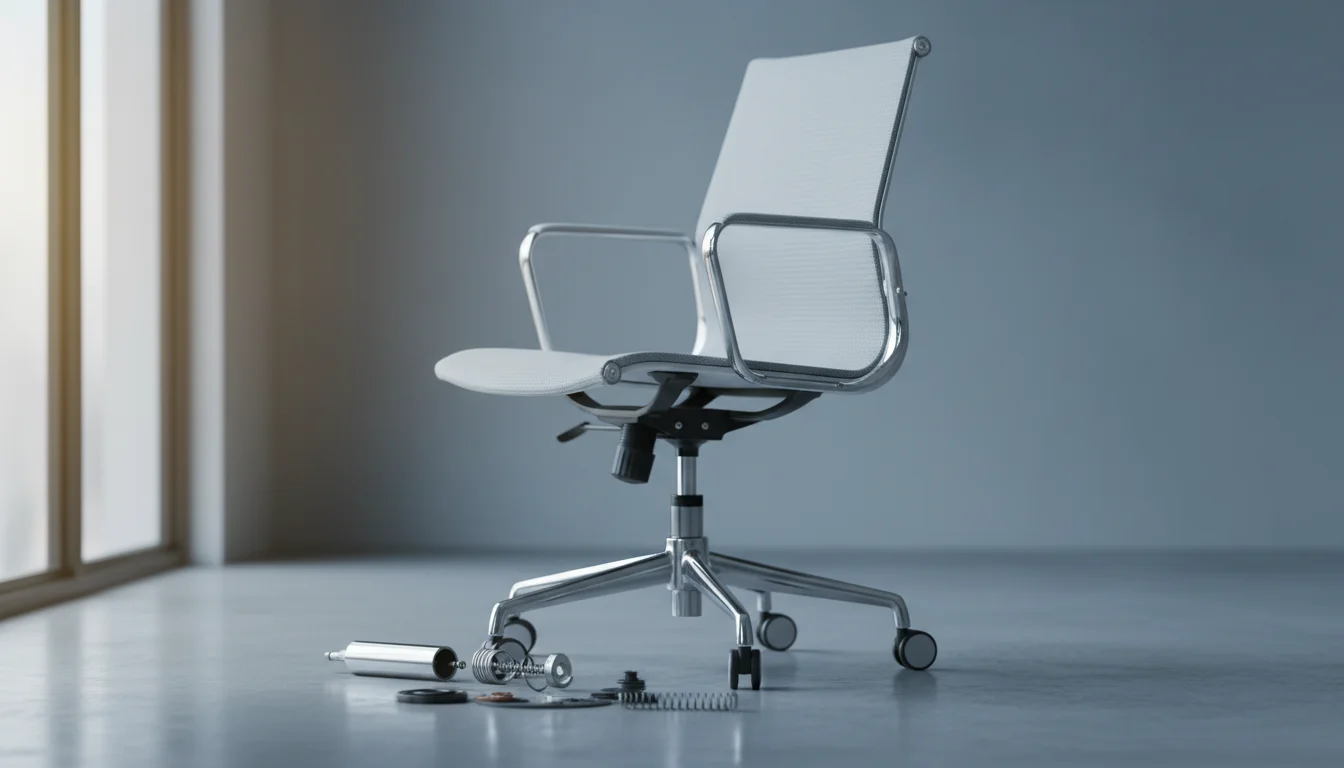
Why Office Chairs Sink: Understanding the Root Cause
The pneumatic cylinder office chair mechanism uses compressed nitrogen gas trapped between internal seals to raise, lower, and hold your seat position. When those seals crack or wear down, gas escapes and your chair loses its ability to maintain height.
Several factors accelerate this wear:
- Daily adjustment frequency. Each time you pull the height lever, the seals experience friction and stress
- Body weight relative to capacity. Sitting at or above the chair's weight limit puts extra pressure on cylinder components
- Cylinder quality. Budget chairs often use thinner seals and lower-grade materials that fail faster
- Impact stress. Dropping into your chair rather than sitting gradually creates pressure spikes that damage seals
- Temperature extremes. Hot and cold environments cause seals to expand and contract, accelerating cracks
The average gas lift cylinder lasts 3-5 years with regular use. Heavy users or those near the weight limit might see failure in as little as 2 years, while premium cylinders in high-end chairs often last 7-10 years.
I learned this the hard way after my second chair failed in 18 months. It turned out I was 15 pounds over the rated capacity—a detail that matters more than most people realize.
Quick Temporary Fixes Without Tools
When your office chair won't stay up and you need an immediate solution, several household items can create a mechanical stop that prevents the cylinder from compressing further. These methods work for days to weeks depending on usage.
| Method | Materials Needed | Durability | Adjustability | Best For |
|---|
| Hose Clamp | Metal hose clamp, screwdriver | 2-4 weeks | Yes, repositionable | Most situations |
|---|---|---|---|---|
| PVC Pipe Sleeve | PVC pipe, saw | 4-8 weeks | No, fixed height | Long-term temp fix |
| Duct Tape Wrap | Duct tape (lots of it) | 1-3 days | No | Emergencies only |
| Rubber Stopper | Tennis ball or rubber stopper | 3-7 days | No | Quick friction fix |
The hose clamp method works best for most people. Wrap it around the exposed cylinder shaft at your desired height and tighten until snug. The clamp acts as a physical barrier that prevents descent.
For the PVC pipe approach, measure the cylinder diameter and cut a pipe sleeve with a lengthwise slit. Snap it around the cylinder at the right height. This creates a sturdy spacer but locks you into one position permanently.
Fair warning: duct tape leaves residue and fails quickly under body weight. Use it only when nothing else is available and you need to finish the workday. Vevor DIY Guide covers these methods with step-by-step photos.
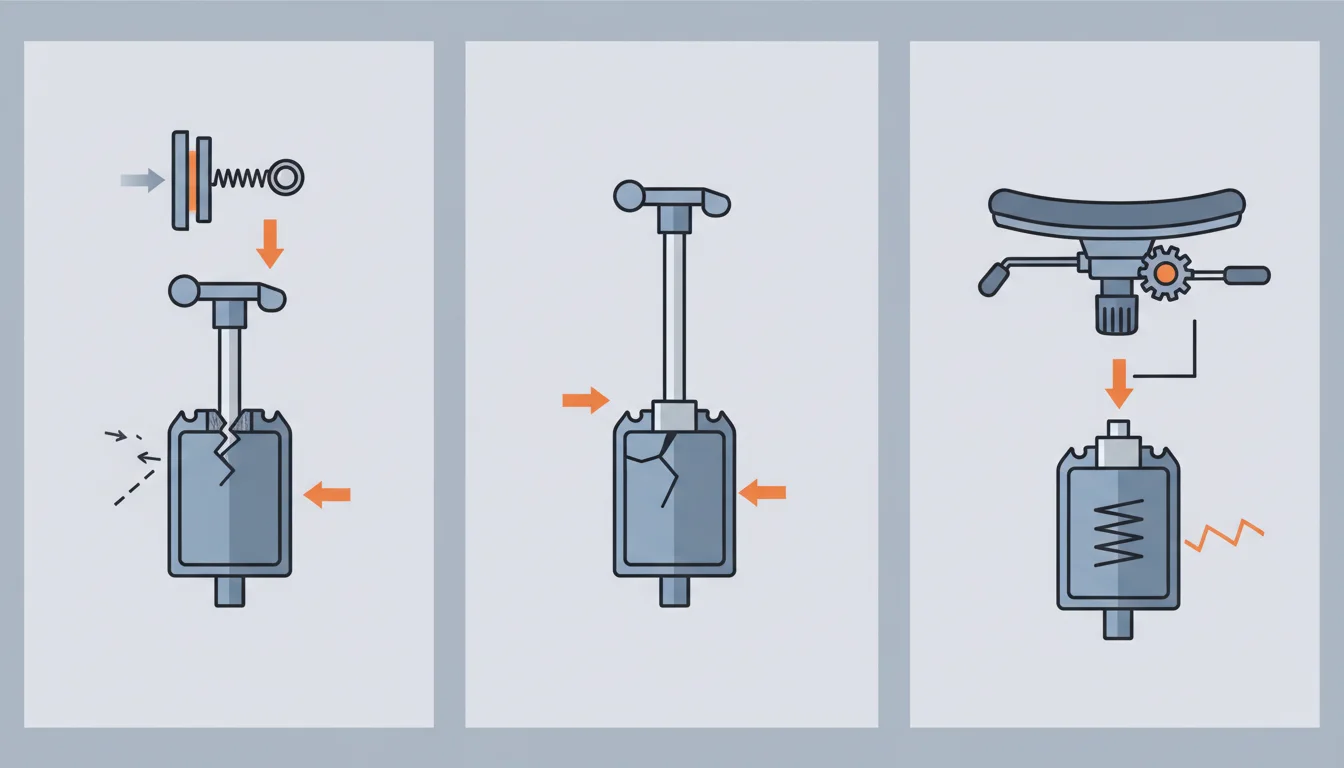
Permanent Repair Solutions: Step-by-Step Guide
Replacing the gas cylinder entirely fixes the problem permanently and costs $15-40 for the part versus $100-500+ for a new chair. The job takes 20-45 minutes with basic tools.
Tools you need:- Rubber mallet or hammer
- Pipe wrench or adjustable plumber's wrench
- Penetrating oil (WD-40 or PB Blaster)
- New gas cylinder matching your chair specifications
- Old towel or drop cloth
1. Flip the chair upside down on a protected surface
2. Pull the wheelbase straight down—it should pop off the cylinder with moderate force
3. If stuck, spray penetrating oil at the joint and wait 10 minutes
4. Use the pipe wrench to grip the cylinder firmly
5. Twist and pull downward; expect this to require significant effort
6. Tap the base with a rubber mallet if the cylinder remains stuck
Installation steps:1. Clean all old grease and debris from the chair mechanism and base mounting points
2. Verify the new cylinder diameter and length match your chair specifications
3. Insert the new cylinder into the chair mechanism—it press-fits into place
4. Flip the chair upright and push the wheelbase onto the cylinder bottom
5. Sit in the chair to fully seat both connections
Safety warning: Never attempt to open, drill into, or repair the cylinder itself. These contain pressurized gas, and improper handling can cause serious injuries. Autonomous AI documents cases of defective cylinders rupturing. Always replace rather than repair the cylinder unit.The hardest part is removing a stuck old cylinder. I spent 25 minutes on mine before the penetrating oil finally worked. Patience beats force here.
Repair vs Replace: Making the Right Decision
Repairing your office chair sinking problem makes financial sense when the frame and ergonomic components remain solid. Replacement becomes the smarter choice when multiple parts fail simultaneously or the chair lacks proper support features.
| Decision Factor | Repair ($15-50) | Budget Chair ($80-150) | Quality Chair ($200+) |
|---|
| Cost effectiveness | Best for isolated cylinder failure | Reasonable for old, worn chairs | Best for severe damage to premium chair |
|---|---|---|---|
| Ergonomic quality | Maintains existing support | Often basic lumbar, fixed armrests | Full adjustability, better materials |
| Environmental impact | Lowest waste | Moderate | Highest initial impact |
| Warranty status | May void coverage | Full new warranty | Full new warranty |
| Time investment | 30-60 minutes DIY | Immediate | Immediate |
- Only the cylinder has failed
- The chair frame shows no cracks or wobble
- Lumbar support and armrests function properly
- The chair is less than 5 years old
- The original purchase price exceeded $150
- Multiple components are failing (wheels, armrests, back mechanism)
- The frame is cracked or structurally compromised
- The chair causes back pain or lacks ergonomic adjustment
- Repair cost exceeds 50% of replacement value
Premium chairs from Herman Miller, Steelcase, or Secretlab almost always justify repair costs. A $30 cylinder in a $1,200 chair extends its life another 5+ years. Budget chairs from big box stores often cost less to replace than repair when you factor in labor time. Chairorama breaks down this calculation thoroughly.
Prevention Tips to Extend Your Chair's Life
Your office chair keeps sinking faster when daily habits stress the gas cylinder beyond normal wear patterns. Small behavior changes can extend cylinder life by 2-3 years.
Height adjustment habits:- Set your height once and leave it—every adjustment wears the seals
- If sharing a chair, consider a desk riser instead of constant chair adjustment
- Mark your optimal height with tape so you can adjust precisely rather than hunting
- Know your chair's weight capacity; most budget chairs max out at 250 lbs
- Sit down gradually rather than dropping into the seat
- Remove heavy items from pockets before sitting for extended periods
- Wipe the exposed cylinder shaft monthly to remove dust and grit
- Apply silicone lubricant to the cylinder annually
- Keep the chair in climate-controlled spaces—garage storage destroys seals faster
- Inspect the cylinder boot (rubber cover) for cracks yearly
- Chairs with class 4 gas cylinders outlast class 3 by 40-60%
- Steel cylinder housings beat plastic
- Thicker cylinder shafts (50mm vs 38mm) handle more weight cycles
I started wiping down my cylinder monthly after the second failure. Three years later on the replacement, I've experienced zero sinking. The maintenance takes 30 seconds.
Ergonomic Consequences of a Sinking Chair
An ergonomic office chair loses its health benefits the moment it drops below your optimal sitting height. The cascade of postural problems starts immediately and compounds over weeks of use.
Physical consequences:- Neck and shoulder strain. When your seat drops, your eyes fall below monitor center, forcing your neck into a constant upward tilt
- Wrist positioning issues. A lower seat height raises your wrists relative to the keyboard, increasing carpal tunnel risk
- Lower back compression. Lumbar support designed for one height fails to contact your spine properly at another
- Hip flexor tightening. Knees rising above hips in a too-low chair shortens hip flexors over time
The constant need to readjust interrupts focus every few minutes. Studies on office ergonomics show that workers with improperly adjusted chairs take 23% more micro-breaks. That adds up to nearly an hour of lost productive time weekly.
Proper chair height positions your thighs parallel to the floor with feet flat. Your elbows should rest at 90 degrees when typing. A sinking chair makes both impossible to maintain. Fix the problem within a week of noticing it—your body adapts to poor posture faster than you recover from it.FAQ
How do I know if my gas cylinder is failing or already broken?
A failing cylinder sinks slowly over 30-60 minutes after you sit down. A broken cylinder drops immediately when weight is applied or won't hold any height at all. Test by setting your height, sitting for an hour, then standing to check the position.
Do gas cylinder replacements work on all office chair brands?
Most office chairs use universal cylinder sizes with either 2-inch or 2.5-inch diameter bases. Measure your current cylinder's diameter and length before ordering. Premium brands like Herman Miller sometimes require brand-specific replacement parts.
How much weight can a standard office chair gas cylinder support?
Standard class 3 cylinders support 200-250 lbs. Heavy-duty class 4 cylinders handle 300-400 lbs. The cylinder rating should match or exceed your body weight plus anything you carry while sitting. Exceeding the limit shortens cylinder life dramatically.
Is it safe to use a sinking chair while waiting for replacement parts?
Using temporary fixes like hose clamps creates a safe stopgap for days to weeks. However, sitting in a fully broken chair that drops suddenly risks falls and impact injuries. The ergonomic damage from improper height also accumulates quickly with daily use.
Why does my new office chair already sink after a few months?
Early failure usually indicates a defective cylinder or exceeded weight capacity. Check your warranty coverage immediately. Budget chairs under $100 frequently ship with lower-quality cylinders that fail within the first year.
Can I upgrade to a better gas cylinder than the original?
Yes. Many aftermarket cylinders offer higher weight ratings and longer warranties than OEM parts. Look for class 4 cylinders with steel housings. The upgrade typically costs $10-15 more than standard replacements and lasts significantly longer.
Does chair sinking indicate other problems I should check?
Cylinder failure often coincides with worn caster wheels, loose armrests, and degraded foam cushioning. When replacing the cylinder, inspect the base for cracks, test the tilt mechanism, and check all adjustment levers. Address multiple issues simultaneously to avoid repeated repairs.