Do Office Chairs Damage Wood Floors? Prevention Guide for 2025
Do Office Chairs Damage Wood Floors? Prevention Guide for 2025
Do office chairs damage wood floors? Yes. Standard hard plastic casters concentrate your body weight onto small contact points, causing scratches, scuffs, and finish wear. This guide covers the exact damage types, prevention methods, and repair options for protecting your hardwood.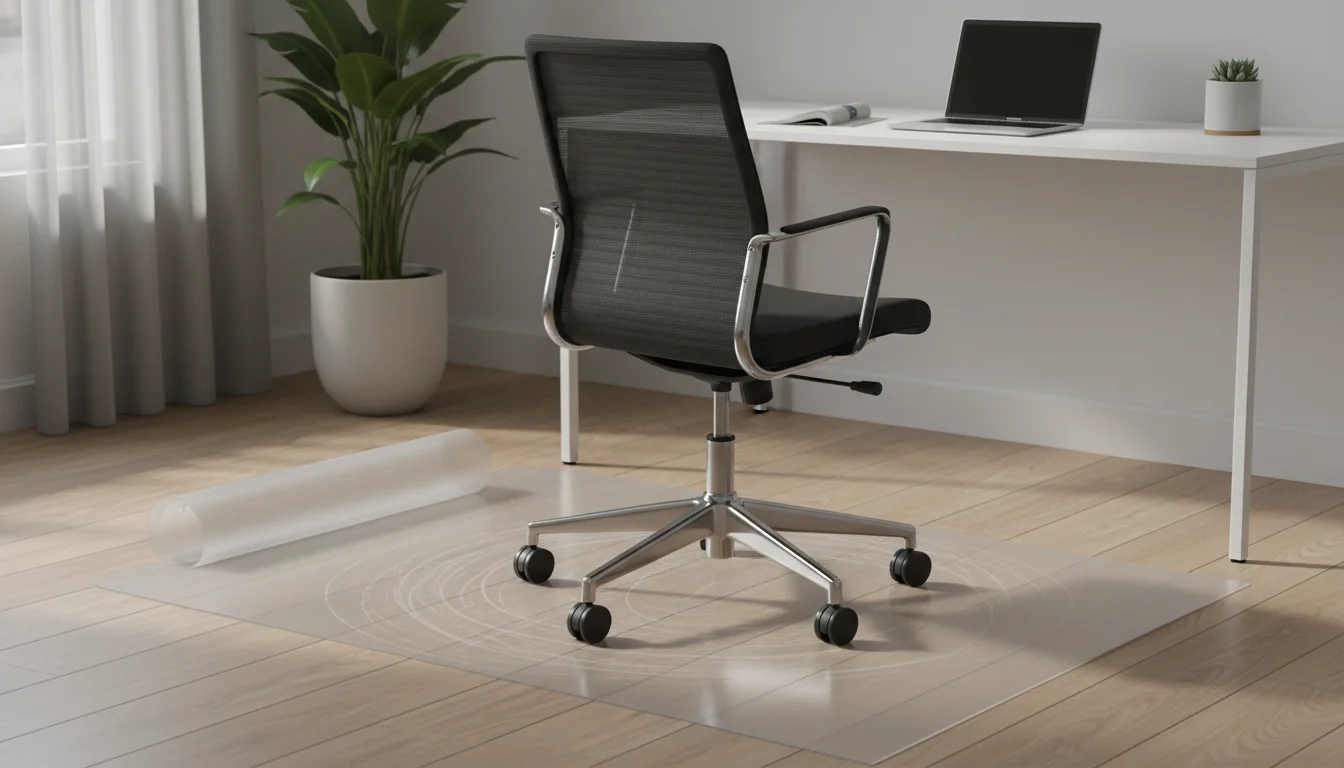
How Office Chairs Damage Hardwood Floors
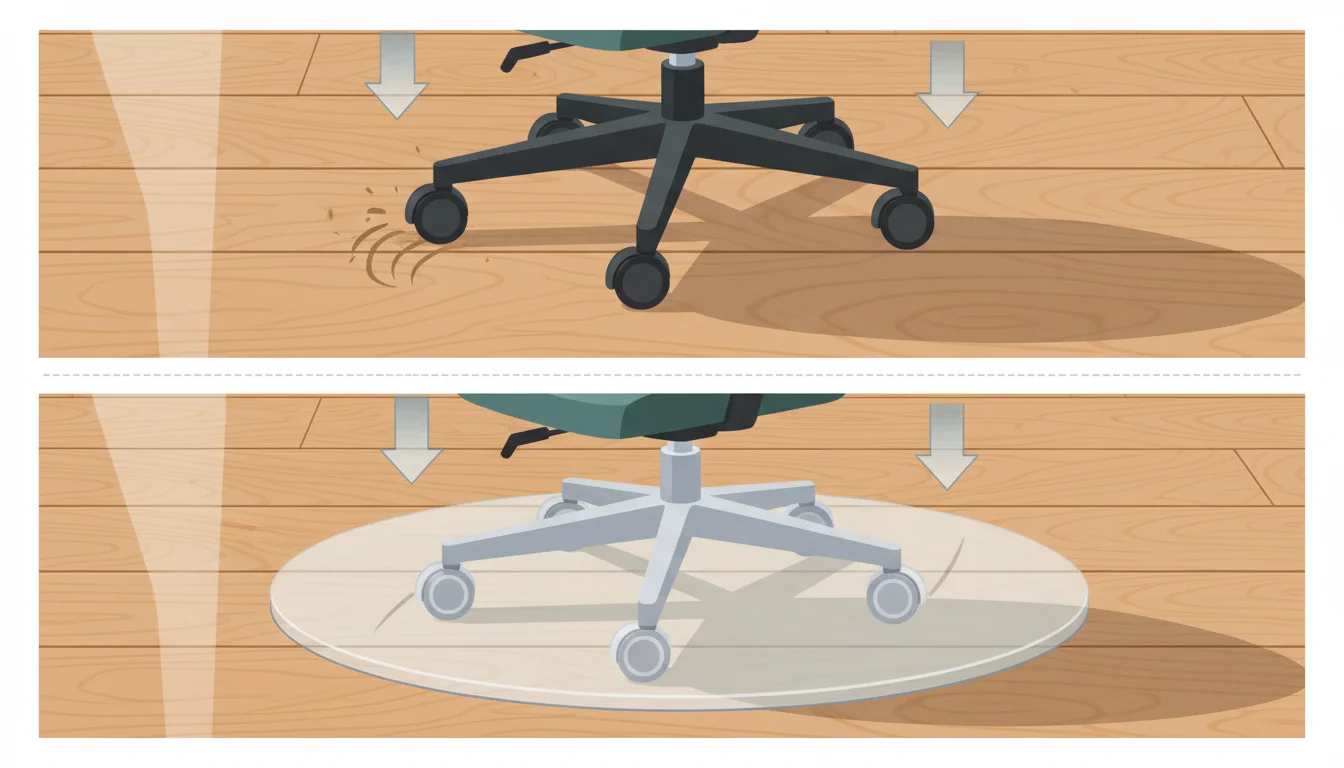
Hard plastic casters slide instead of rolling smoothly on wood surfaces, creating abrasion that wears down your floor's protective finish over time. The damage compounds as debris gets trapped under wheels, acting like sandpaper with every movement.
| Damage Type | Cause | Timeline |
|---|
| Surface scratches | Plastic wheels dragging on wood | Weeks to months |
|---|---|---|
| Finish wear | Repeated rolling pressure | 3-6 months |
| Dull spots | Friction removing shine | 1-3 months |
| Visible wear tracks | Concentrated rolling patterns | 6-12 months |
| Deep gouges | Accumulated damage + debris | 1-2 years |
Weight plays a bigger role than most people realize. A 200-pound person exerts roughly 50 pounds of pressure per caster wheel, and that force concentrates on contact points smaller than a dime.
I noticed my own floor damage started near my desk's pull-out keyboard tray. The constant small movements back and forth created a distinct wear pattern within six months. [The Office Oasis] confirms this rolling pattern damage is among the most common complaints from home office workers.
Office Chair Casters: Which Wheels Are Safe for Wood Floors
Polyurethane rollerblade-style wheels offer the best protection for bare hardwood floors. They roll smoothly without sliding, distribute weight across a larger surface area, and grip the floor gently instead of scraping it.
| Caster Type | Floor Safety | Rolling Smoothness | Price (Set of 5) | Best For |
|---|
| Hard plastic (standard) | Poor | Moderate | Included with chair | Carpet only |
|---|---|---|---|---|
| Rubber-coated | Good | Good | $20-35 | Light hardwood use |
| Polyurethane rollerblade | Excellent | Excellent | $25-50 | Daily hardwood use |
| Felt/soft material | Excellent | Poor | $15-25 | Stationary chairs |
Before ordering replacement casters, measure your chair's stem size. Most office chairs use either a 7/16-inch or 3/8-inch grip ring stem. Pull out an existing caster and measure the metal post diameter.
Switching my standard casters to polyurethane wheels took four minutes and stopped new scratches immediately. Fair warning: the chair rolls noticeably easier, which took a day to adjust to. Boulies recommends replacing all five casters at once to ensure even weight distribution.
Chair Mat Solutions: Pros, Cons, and Alternatives
Traditional plastic mats protect floors effectively but crack within 1-2 years under regular use. Glass mats last longer and look better. Your choice depends on budget, aesthetics, and how much you move your chair.
| Mat Type | Protection Level | Durability | Price Range | Drawbacks |
|---|
| Plastic (PVC) | Good | 1-2 years | $30-60 | Cracks, looks cheap |
|---|---|---|---|---|
| Tempered glass | Excellent | 10+ years | $100-300 | Heavy, expensive |
| Bamboo/wood | Good | 3-5 years | $50-150 | Needs flat floors |
| Polycarbonate | Very good | 3-5 years | $50-100 | Scratches over time |
| Low-pile rug | Moderate | 2-4 years | $40-120 | Impedes rolling |
Size matters more than thickness. Your mat should extend at least 6 inches beyond your maximum chair reach in every direction. Most people underestimate how far they roll during a workday.
Glass mats sound fragile but aren't. Vitrazza makes tempered glass mats rated for over 1,000 pounds. The upfront cost stings, but compare it to refinishing hardwood floors at $3-8 per square foot.
Alternative Protection Methods Beyond Mats
A fresh polyurethane floor finish creates a protective barrier that resists scratches and wear from chair wheels. This approach protects your entire floor instead of just one spot.
- Polyurethane finish: Apply water-based polyurethane every 2-3 years. It dries in 24 hours, adds visible shine, and costs $30-50 for DIY application.
- Furniture glides: Attach felt pads to your chair base for stationary work. Replace them monthly as they compress and collect debris.
- Strategic area rugs: Place a 5x7 rug under your entire desk setup. Choose low-pile options under 0.5 inches for smooth rolling.
- Floor wax: Apply paste wax quarterly for added scratch resistance. It takes 30 minutes and costs under $15.
- Standing desk hybrid: Reduce rolling chair time by 50% with a sit-stand setup. Your floor gets half the wear.
Cardboard works surprisingly well for temporary protection during moves or furniture rearrangement. I keep a flattened moving box near my desk for those days when I'm rolling around more than usual.
The standing desk approach changed my perspective. Alternating between sitting and standing cut my chair rolling time significantly, and my floor shows noticeably less wear in areas where I used to scoot constantly. 50Floor suggests combining multiple protection methods for best results.
Maintenance Tips to Minimize Floor Damage
Weekly caster cleaning prevents 80% of floor scratches caused by trapped debris. Hair, dust, and small particles wrap around wheel axles and grind into your floor with every roll.
- Daily: Quick sweep or vacuum under your desk area. Takes 30 seconds.
- Weekly: Flip your chair and remove hair and debris wrapped around each caster. Use scissors for stubborn tangles.
- Monthly: Inspect casters for flat spots or cracks. Damaged wheels cause uneven pressure.
- Quarterly: Clean the entire floor with hardwood-specific cleaner. Avoid water-based mopping.
- Yearly: Check humidity levels. Wood floors need 30-50% humidity to prevent warping.
Flat spots on casters develop from leaving a heavy chair stationary for weeks. These flat areas create a thumping sensation when rolling and concentrate pressure unevenly.
Replace casters at the first sign of visible damage. A $30 wheel replacement beats a $500 floor repair every time. I learned this after ignoring a cracked caster for two months—the resulting scratch required professional attention.
How to Repair Existing Office Chair Damage on Hardwood
Light surface scratches respond well to wood floor polish or scratch concealer pens matched to your floor's color. Apply in the direction of the wood grain, buff with a soft cloth, and the scratch becomes nearly invisible.
| Damage Level | DIY Fix | Cost | Professional Fix | Cost |
|---|
| Light scratches | Scratch concealer pen | $8-15 | Not needed | - |
|---|---|---|---|---|
| Surface wear | Wood floor polish | $15-25 | Screen and recoat | $1-2/sq ft |
| Medium scratches | Light sanding + stain | $30-50 | Spot refinishing | $3-5/sq ft |
| Deep gouges | Wood filler + stain | $25-40 | Full refinishing | $5-8/sq ft |
For medium damage, sand lightly with 220-grit sandpaper following the grain direction. Apply matching stain, let it dry completely, then seal with polyurethane.
Deep gouges need wood filler. Choose a filler slightly lighter than your floor color since it darkens when sealed. Let it cure for 24 hours before sanding smooth.
Trust me on this: prevention costs far less than repair. I spent $180 on professional spot refinishing for damage that $40 in polyurethane casters would have prevented entirely.
FAQ
Do rubber casters prevent all floor damage?
Rubber casters reduce damage significantly but don't eliminate it completely. Debris trapped under any wheel type causes scratches. Combine rubber or polyurethane casters with regular cleaning for best protection.
How often should I replace office chair casters?
Replace casters every 2-3 years with daily use, or immediately when you notice flat spots, cracks, or rough rolling. Damaged casters accelerate floor wear and create uneven pressure distribution.
Are chair mats bad for hardwood floors?
Quality chair mats protect floors well. Problems occur when dirt gets trapped underneath or when cheap plastic mats crack and expose sharp edges. Lift and clean under your mat monthly.
What hardwood species resist chair damage best?
Harder species like hickory, maple, and white oak resist scratches better than softer woods like pine or cherry. The Janka hardness rating indicates scratch resistance—look for ratings above 1,200.
Do felt furniture pads work for rolling chairs?
Felt pads work for stationary chairs only. They compress quickly under rolling weight and collect debris that scratches floors. Use them for dining chairs, not office chairs you move frequently.
Will refinishing fix all chair damage?
Refinishing repairs surface scratches and finish wear completely. Deep gouges and dents require wood filler before refinishing. Severe damage to soft wood species sometimes needs board replacement.
How much weight can hardwood floors handle from office chairs?
Standard 3/4-inch hardwood handles over 300 pounds distributed across chair casters. Single-point pressure from damaged or small casters causes problems regardless of total weight. Distribute weight across larger wheel surfaces for best results.