Can Your Office Chair Cause Hip Pain? Causes, Solutions & Prevention in 2025
Can Your Office Chair Cause Hip Pain? Causes, Solutions & Prevention in 2025
Hip pain affects millions of desk workers who spend 9+ hours daily in office chairs. Yes, your office chair can absolutely cause hip pain—prolonged sitting shortens hip flexors, creates pressure on deep muscles, and forces joints into compromising angles. This guide covers the biomechanics behind sitting-related hip pain, common mistakes to avoid, and practical solutions for relief.
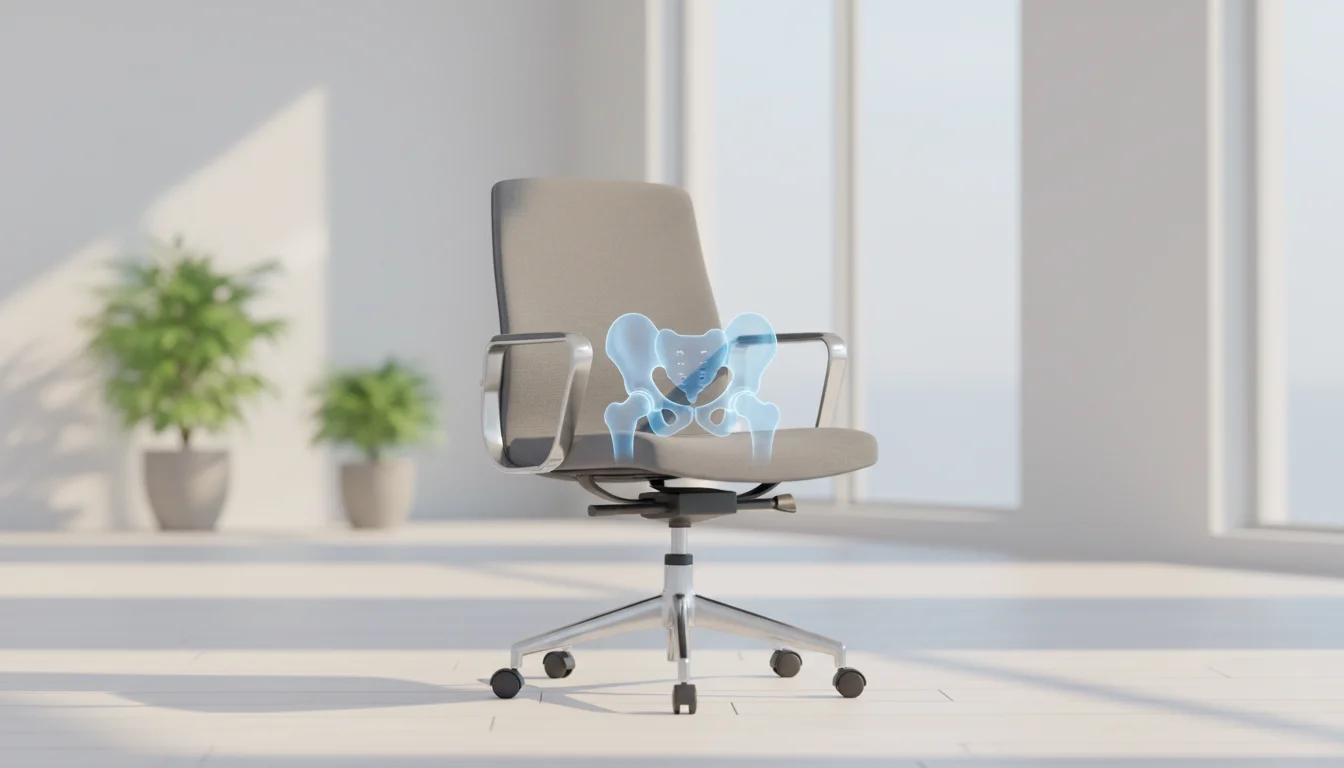
How Office Chairs Cause Hip Pain: The Biomechanics Explained
Your hip flexors shorten and tighten when you sit for extended periods, restricting mobility and triggering pain that radiates through your lower back and pelvis.
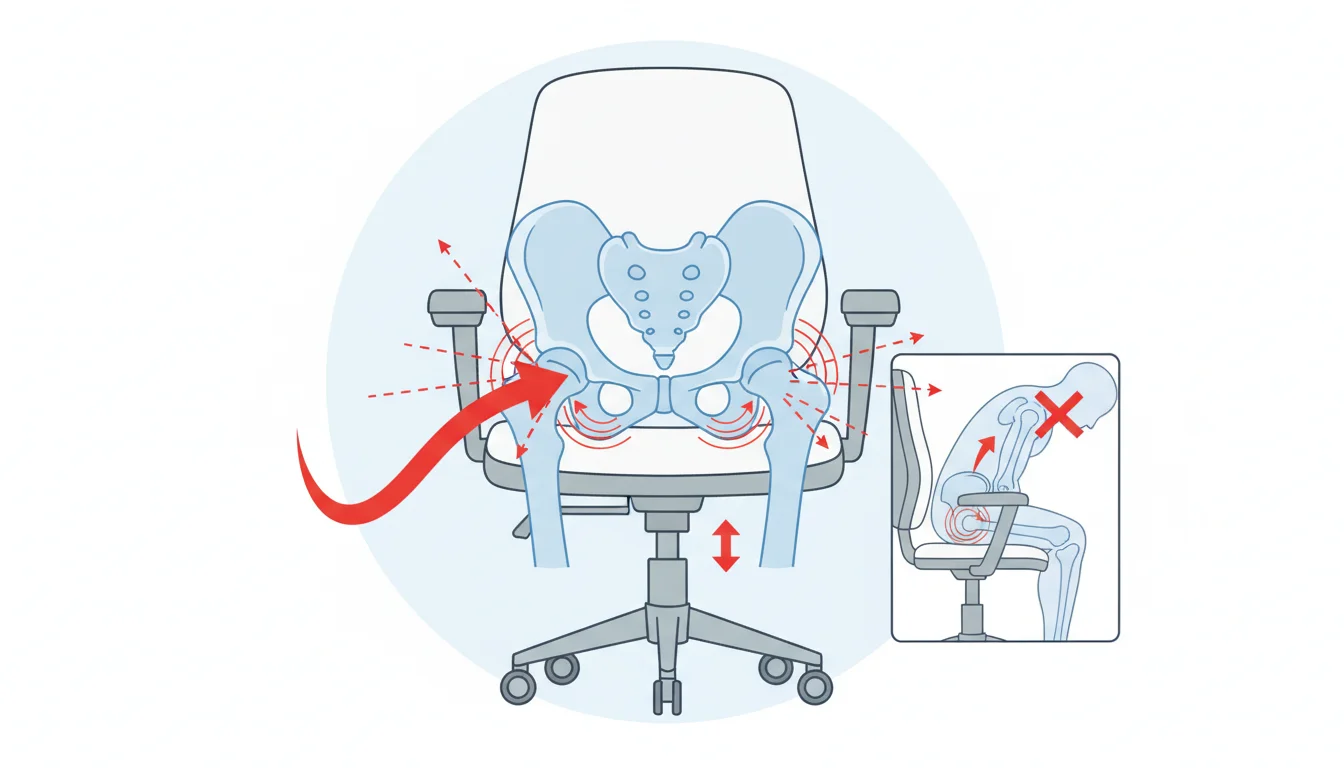
Key biomechanical factors:- Hip flexor shortening: Sitting keeps these muscles contracted for hours. Tight hip flexors pull your pelvis forward, creating compensatory strain on your glutes and lower back.
- Piriformis pressure: A seat that's too deep compresses the piriformis muscle against the sciatic nerve, causing posterior hip pain and potential nerve irritation known as deep gluteal syndrome.
- Joint angle distortion: Seats that are too high force you onto your toes, increasing hip joint pressure. Seats that are too low push your knees above your hips, compressing the joint capsule.
- Poor pressure distribution: Hard or flat seat cushions concentrate your body weight on the ischial tuberosities (sit bones), creating muscle fatigue and joint stress.
Dr. Eric K. Holder from [Yale Medicine] notes that prolonged sitting leads to weakened core and gluteal muscles, which then fail to support the hip joint properly. The result is a cascade of muscle imbalances that manifest as chronic hip flexor pain while sitting at your desk.
Piriformis pain from an office chair often starts subtly—a dull ache after lunch, stiffness when you stand. These signals indicate your chair setup needs attention before minor discomfort becomes a chronic condition.
Common Office Chair Mistakes That Lead to Hip Pain
Most hip pain stems from five preventable errors in how you sit and position your chair.
| Mistake | What Happens | The Fix |
|---|
| Sitting too low | Hip angle drops below 90°, compressing joints | Raise seat until thighs are parallel to floor |
|---|---|---|
| No lumbar support | Pelvis tilts backward, flattening spine curve | Add adjustable lumbar support or a cushion |
| Perching on seat edge | Weight concentrates unevenly on sit bones | Sit fully back against the backrest |
| Crossing legs | Creates asymmetric hip loading and rotation | Keep both feet flat on the floor |
| Skipping movement breaks | Hip flexors stay shortened for hours | Stand every 30-60 minutes |
Over 82% of office workers sit for 9+ hours daily according to [O'Brien Physical Therapy]. That's enough time for tight hip flexors to become your default state.
I spent three months wondering why my right hip ached constantly. It turned out I was crossing my left leg under my chair without realizing it. The asymmetric loading created muscle imbalances that took weeks of stretching to correct. Learning how to avoid hip pain at your desk starts with honest observation of your own habits.
Essential Office Chair Features for Hip Pain Prevention
An ergonomic office chair for hip support needs five specific features working together to maintain neutral joint positioning.
Non-negotiable features:- Adjustable seat depth: Your thighs need full support without pressure behind your knees. Look for sliding seat pans that accommodate different leg lengths.
- Height adjustment range: The best office chair for hip pain lets you achieve a 90-100 degree hip angle regardless of your height. Pneumatic lifts should span at least 4-5 inches.
- Quality cushioning: Memory foam or gel distributes weight across your entire seating surface—firm enough to support, soft enough to relieve pressure points.
- Waterfall seat edge: A curved front edge reduces pressure on the back of your thighs, improving circulation and preventing numbness that contributes to hip strain.
- Lumbar support: Adjustable height and depth maintain your spine's natural curve. Proper lumbar positioning keeps your pelvis neutral, reducing hip flexor tension.
A randomized controlled trial published in PMC found that chairs with adjustable seat height, backrest, and armrests significantly reduce muscle strain in the back and hips by improving posture.
Office chair features for hip pain relief matter less than how you use them. A $1,200 ergonomic chair adjusted incorrectly causes the same problems as a $50 task chair. The next section shows you exactly how to set up any chair for hip health.
Step-by-Step Guide to Adjusting Your Office Chair for Hip Health
Proper office chair adjustment for hip pain takes five minutes and prevents months of discomfort.
Step 1: Set seat heightStand next to your chair and adjust the seat height to just below your kneecap. When you sit down, your feet should rest flat with thighs parallel to the floor.
Step 2: Adjust seat depthSit fully back against the backrest and check the gap between the seat edge and the back of your knees. You need 2-3 finger widths of space. Slide the seat pan forward or backward until you achieve this gap.
Step 3: Position lumbar supportFind the natural inward curve of your lower back by standing straight. Adjust the lumbar support height to match this curve. The support should feel like gentle pressure, not aggressive pushing.
Step 4: Set armrestsRest your arms naturally at your sides. Raise the armrests until they lightly contact your forearms without lifting your shoulders. Your elbows should bend at roughly 90 degrees.
Step 5: DIY fixes for imperfect chairs- Add a seat cushion if your chair is too hard or flat
- Use a footrest if your feet don't reach the floor after height adjustment
- Place a rolled towel or lumbar pillow behind your lower back if built-in support is inadequate
Check your setup every few days. Bodies shift, cushions compress, and adjustments drift. A quick weekly audit keeps your hips healthy.
Exercises and Stretches to Relieve Office Chair Hip Pain
Movement counteracts the damage from sitting. These stretches target the specific muscles affected by prolonged chair time.
Hip flexor stretch (kneeling)Kneel on your right knee with your left foot forward. Push your hips forward until you feel a stretch in the front of your right hip. Hold for 30 seconds, then switch sides. Do this twice daily to combat hip flexor pain from sitting.
Piriformis stretch (figure-four)Sit at the edge of your desk chair. Cross your right ankle over your left knee and gently press your right knee down while leaning slightly forward. Hold for 30 seconds. This provides relief for that deep posterior ache.
Seated hip circlesSit tall in your chair and make slow circles with your hips, keeping your upper body still. Complete ten circles in each direction. Do this every hour without leaving your desk.
Standing hip hingeStand up and hinge forward at your hips with a slight knee bend, reaching toward your toes. Feel the stretch through your hamstrings and glutes. Hold for 15 seconds and repeat three times.
Glute bridges (strengthening)Lie on your back with knees bent. Lift your hips toward the ceiling, squeezing your glutes at the top. Hold for 3 seconds and lower slowly. Do 15 repetitions daily to rebuild the hip stability that sitting destroys.
Set a phone timer for every 45 minutes. When it buzzes, stand up and do one stretch. This single habit prevents more hip problems than any expensive chair.
When to Seek Professional Help for Hip Pain
Some hip pain signals problems beyond what ergonomic fixes can solve.
Warning signs requiring medical attention:- Pain that wakes you at night
- Grinding or catching sensations in the hip joint
- Inability to bear weight on the affected leg
- Pain lasting more than two weeks despite ergonomic changes
- Numbness or tingling radiating down your leg
- Visible swelling around the hip
Physical therapists assess your specific movement patterns and identify muscle imbalances causing your pain. They design targeted exercise programs that address your individual weaknesses. Many insurance plans cover PT visits without referrals.
Your doctor can rule out conditions like hip labral tears, bursitis, or early arthritis that mimic sitting-related pain. A proper diagnosis ensures you're treating the actual problem, not just managing symptoms.
Ergonomic changes work best when integrated with professional treatment. Your physical therapist can guide which chair adjustments matter most for your condition and modify exercises as you improve. This combination resolves hip pain faster than either approach alone.
FAQ
How long does it take for hip pain from sitting to improve?
Most people notice improvement within 2-3 weeks of proper chair adjustment and daily stretching. Chronic cases involving muscle imbalances require 6-8 weeks of consistent effort. Pain persisting beyond this timeline warrants professional evaluation.
Should I use a standing desk for hip pain?
Standing desks help by varying your position throughout the day. Alternate between sitting and standing every 30-60 minutes. Standing all day creates different problems, including foot pain and lower back fatigue. Balance matters more than choosing one position.
What's the ideal hip angle for sitting?
Aim for 90-100 degrees between your torso and thighs. Slightly open angles (100-110 degrees) reduce hip flexor tension for some people. Avoid angles below 90 degrees, which compress the hip joint and restrict circulation.
Do seat cushions actually help hip pain?
Quality seat cushions redistribute pressure and reduce contact stress on sit bones. Memory foam and gel cushions work best. Thin or overly soft cushions compress quickly and lose effectiveness. Replace cushions showing visible wear or permanent indentations.
Can hip pain from sitting cause permanent damage?
Prolonged untreated hip pain can lead to chronic conditions including arthritis, bursitis, and permanent muscle imbalances. Early intervention through ergonomic changes and stretching prevents long-term damage. Don't ignore persistent discomfort hoping it resolves on its own.
How often should I replace my office chair?
Quality ergonomic chairs last 7-10 years with proper care. Replace your chair when the cushioning no longer rebounds, adjustment mechanisms fail, or support features stop functioning. A worn chair that once fit perfectly now contributes to pain as its components degrade.
Is memory foam or mesh better for hip pain?
Memory foam provides superior pressure distribution for hip pain sufferers. Mesh seats run cooler but offer less cushioning on sit bones. Consider adding a memory foam seat cushion to a mesh chair for the benefits of both materials.