Best Office Chair After Hip Replacement: 2025 Recovery Guide
Best Office Chair After Hip Replacement: 2025 Recovery Guide
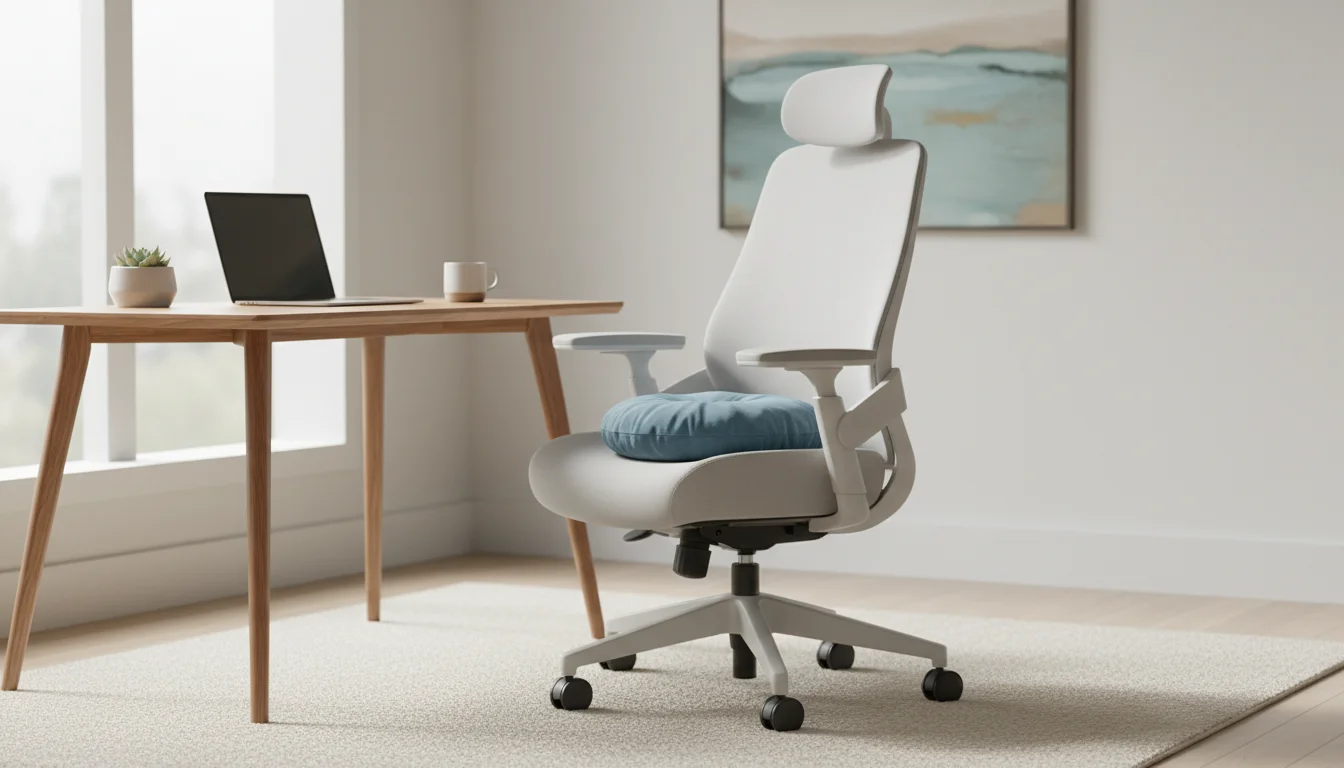
Returning to work after hip replacement surgery requires seating that maintains your hip angle above 90 degrees to prevent dislocation. More than 450,000 Americans undergo hip replacement annually, and selecting the wrong chair can compromise recovery during the critical first 12 weeks. This guide covers essential chair features, recovery-stage recommendations, and the best office chair after hip replacement picks for 2025.
Understanding Hip Replacement Recovery and Seating Needs
Your recovery follows three distinct phases, each with specific seating requirements that standard office chairs fail to meet.
Recovery Timeline and Hip Precautions:| Phase | Timeframe | Mobility Level | Seating Priority |
|---|
| Immediate Post-Op | 0-6 weeks | Limited, strict precautions | Maximum seat height, firm armrests |
|---|---|---|---|
| Early Recovery | 6-12 weeks | Increasing activity | Adjustable height, moderate support |
| Full Recovery | 3-6 months | Near-normal function | Standard ergonomic with hip-safe features |
- Avoid hip flexion beyond 90 degrees at all times
- Never cross your legs while seated
- Limit rotation and twisting movements
- Use armrests for all sitting and standing transitions
Standard office chairs create problems because seat heights typically range from 16-18 inches. This forces your hips below your knees, pushing flexion past the 90-degree danger zone. Deep cushions make matters worse by letting you sink into harmful angles.
I learned this firsthand watching my father struggle with a regular desk chair six weeks post-surgery. His physical therapist spotted the problem immediately—the chair was undoing his recovery progress every workday.
Essential Chair Features for Hip Replacement Patients
The right chair keeps your hips positioned above your knees while providing stable support for safe transitions in and out of seating.
| Feature | Recommended Spec | Why It Matters |
|---|
| Seat Height | 18-22+ inches adjustable | Keeps hips above knees, reduces joint stress |
|---|---|---|
| Seat Depth | 16-18 inches | Prevents slouching, maintains hip angle |
| Seat Angle | Forward tilt option | Opens hip angle beyond 90 degrees |
| Cushion | Medium-firm, high-density foam | Prevents sinking that closes hip angle |
| Armrests | Height-adjustable, padded | Assists safe sitting/standing transfers |
| Backrest | Adjustable lumbar, high back | Supports spine without forcing forward lean |
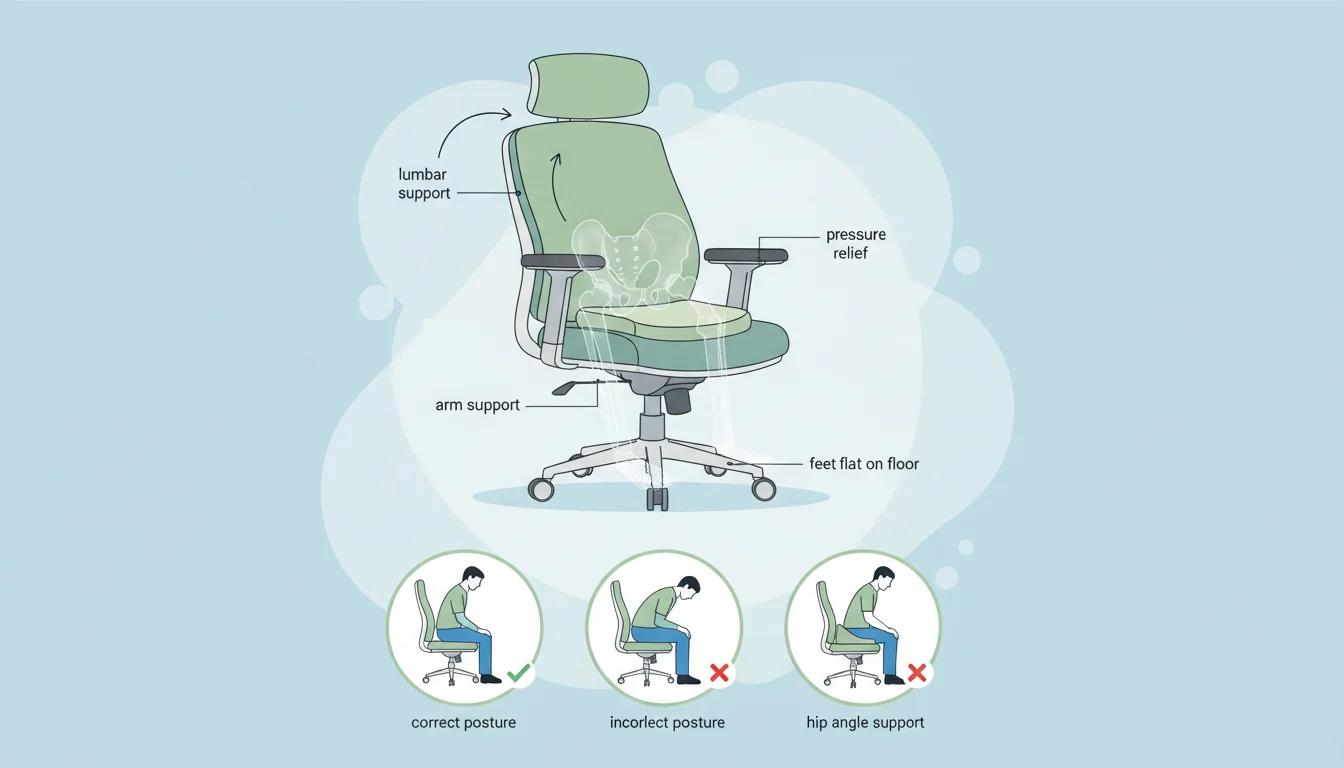 Seat height is your most critical specification. Hospital-grade hip chairs often feature 24.5-inch seat heights because this measurement dramatically reduces strain during transfers. According to Vivid Care, occupational therapists recommend specialized seating for at least 6-12 weeks post-surgery.
Cushion firmness deserves more attention than most buyers give it. Soft padding feels comfortable initially but allows your pelvis to sink backward. This rotates your hips into flexion and strains the surgical site. Medium-firm, high-density foam maintains your position throughout long work sessions.
Seat height is your most critical specification. Hospital-grade hip chairs often feature 24.5-inch seat heights because this measurement dramatically reduces strain during transfers. According to Vivid Care, occupational therapists recommend specialized seating for at least 6-12 weeks post-surgery.
Cushion firmness deserves more attention than most buyers give it. Soft padding feels comfortable initially but allows your pelvis to sink backward. This rotates your hips into flexion and strains the surgical site. Medium-firm, high-density foam maintains your position throughout long work sessions.
The forward tilt feature surprised me with its effectiveness. A slight 5-degree forward angle opens your hip past 90 degrees automatically. You maintain better posture without constant mental effort to sit correctly.
Top Office Chair Recommendations by Recovery Stage
Your chair needs change as healing progresses. Match your seating to your current recovery phase for optimal joint protection and comfort.
Early Recovery (0-6 Weeks):- Medical-grade hip chairs with 22-24 inch seat heights
- Extra-firm armrests rated for transfer support
- Minimal cushion depth to prevent sinking
- Examples: Office Star BC9601HT High Hip Chair, VELA Activity Chair
- Standard ergonomic chairs with extended height range
- Adjustable seat depth and forward tilt
- Sturdy armrests for occasional transfer assistance
- Examples: HON Ignition 2.0 with extended cylinder, Steelcase Series 1
- Premium ergonomic chairs with full adjustability
- Dynamic lumbar support for extended work sessions
- Quality construction for years of daily use
- Examples: Herman Miller Aeron, Steelcase Gesture, Branch Verve
| Price Tier | Seat Height Range | Must-Have Features |
|---|
| Under $300 | 18-22 inches | Pneumatic lift, basic tilt |
|---|---|---|
| $300-$700 | 17-23 inches | Forward tilt, adjustable depth |
| $700+ | 16-24 inches | Full adjustability, 12+ year warranty |
The Autonomous ErgoChair guide notes that chairs with multi-tilt systems maintain pelvic alignment better than simple recline mechanisms. This matters more than brand name during active recovery.
Budget Options vs Premium Ergonomic Chairs
Your investment level should match your usage frequency, existing joint issues, and daily desk time.
Budget Picks ($150-$300):- Prioritize adjustable height above all other features
- Accept basic lumbar support and fixed armrests
- Look for pneumatic cylinders rated for your weight plus 50 pounds
- Best for: Occasional desk work, temporary recovery period
- Expect adjustable seat depth and forward tilt
- 4D armrests become standard at this tier
- Higher-density foam cushions provide better long-term support
- Best for: Daily desk work, 4-6 hours seated
- Full adjustability including lumbar depth and height
- Advanced materials like mesh or temperature-regulating foam
- 10-15 year warranties reflect build quality
- Best for: 8+ hours daily, permanent work-from-home, chronic hip issues
- You sit more than 6 hours daily
- You have additional back or knee problems
- Your work-from-home setup is permanent
- Your surgeon recommends ongoing hip precautions
Here's a tip that saved my father significant money: some medical supply stores offer insurance-covered seating options for post-surgical patients. [Vitality Medical] and similar suppliers stock chairs specifically designed for hip replacement recovery. Ask your surgeon for a prescription or letter of medical necessity.
Fair warning: budget chairs under $150 rarely offer adequate seat height adjustment. The cylinder length limits maximum height to 18-19 inches, putting most users right at the 90-degree danger zone rather than safely above it.
DIY Modifications and Accessories for Existing Chairs
Temporary modifications can bridge the gap during early recovery before you invest in permanent seating solutions.
Effective modifications:- Seat risers: Add 2-4 inches to any chair with leg extenders or platform risers
- Wedge cushions: Create 8-15 degrees of forward tilt to open hip angle
- Cylinder replacement: Swap standard pneumatic cylinders for extended versions
- Lumbar rolls: Add support without changing seat mechanics
- Your current chair has a solid frame and quality construction
- You need a solution for 4-6 weeks only
- Budget constraints prevent immediate chair purchase
- You work from multiple locations
- Seat pan depth exceeds 19 inches
- Maximum height with modifications stays below 19 inches
- Frame wobbles or armrests lack stability
- Cushion has permanent compression
Wedge cushions deserve special mention. A 15-degree wedge transforms a standard 17-inch seat into an effective hip-safe position. The angle compensates for limited seat height by tilting your pelvis forward. Cost runs $25-60 compared to $400+ for a new chair.
Trust me on this: test any modification for stability before relying on it. A riser that shifts during transfers creates fall risk. Secure all additions firmly and check them weekly during recovery.
Setting Up Your Chair and Workspace for Hip Safety
Proper chair selection means little without correct workspace configuration. Your desk, monitor, and movement habits must work together with your seating.
Desk height adjustment:- Raise desk 2-4 inches to match elevated chair position
- Use desk risers or an adjustable-height desk if needed
- Elbows should rest at 90 degrees when typing
- Position screen at eye level to avoid leaning forward
- Keep keyboard within easy reach without extending arms
- Place mouse to prevent torso rotation
- Stand every 30-45 minutes during the first 6 weeks
- Walk briefly during standing breaks
- Perform physical therapist-approved stretches hourly
- Hip pain increases during or after work
- Difficulty standing after seated periods
- Lower back stiffness develops
- You catch yourself slouching frequently
Physical therapists emphasize the standing break schedule above all other workspace factors. Even the perfect chair causes problems when you sit for 3-hour stretches. Set a timer—your hip heals faster with regular movement.
FAQ
How soon after hip replacement surgery is it safe to sit in an office chair?
Most surgeons allow sitting in appropriate chairs within the first week post-surgery, provided the chair maintains hip angles above 90 degrees. Standard office chairs remain unsafe until your surgeon clears all hip precautions, typically at 6-12 weeks.
What seat height prevents hip flexion beyond 90 degrees?
Seat height depends on your leg length. As a general rule, your thighs should slope slightly downward from hip to knee when seated. For most adults, this requires 19-22 inch seat height. Taller individuals need 22-24 inches.
Are kneeling chairs safe after hip replacement?
Kneeling chairs create variable hip angles and require core stability during transfers. Most physical therapists advise against them during the first 3-6 months. Stick with standard ergonomic seating until you reach full recovery and receive surgeon approval.
Do I need a different chair for home versus office use?
Consistency matters more than having identical chairs. Both chairs must meet minimum height requirements and provide stable armrests for transfers. Many patients use a medical-grade chair at home during early recovery, then match their office setup for long-term use.
How long should I keep using a hip-safe chair after full recovery?
Hip-safe features benefit joint health indefinitely. Proper seat height and forward tilt reduce strain on both natural and replaced hips. Consider your post-recovery chair a permanent upgrade rather than temporary medical equipment.
Will my employer pay for an ergonomic chair after hip surgery?
Many employers accommodate documented medical needs through HR or disability services. Request a letter from your surgeon specifying required chair features. Some workplace health plans cover ergonomic equipment with proper documentation.
What weight capacity should I look for in a hip chair?
Choose a chair rated for at least 50 pounds above your body weight. Higher ratings indicate sturdier construction and more stable transfers. Medical-grade hip chairs typically support 300-400 pounds regardless of user weight.